


Views: 0 Author: Site Editor Publish Time: 2026-04-29 Origin: Site


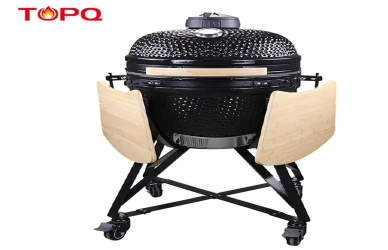
Upgrading to a kamado is a significant investment. However, choosing the wrong size often leads to chronic cooking issues. You might struggle to fit large cuts of meat. Conversely, you could waste excessive fuel for simple weeknight dinners. Buyers frequently rely on abstract "square inch" metrics. These numbers fail to reveal true performance. They ignore how size impacts thermal efficiency, accessory budgets, and infrastructure needs. A mismatched grill quickly becomes a frustrating patio ornament rather than a versatile culinary tool. We will move beyond raw dimensions to evaluate industry-leading brands based on real-world usability. You will discover how shape dictates scaling. We will explore hidden accessory expenses and discuss installation realities. By the end, you can confidently compare top options to find your perfect fit.
Capacity vs. Usability: Square inch specs are misleading; evaluate size by "burger count" and the ability to comfortably fit an unsliced packer brisket.
The Shape Factor: As size scales up, oval designs (like Primo) offer superior true dual-zone cooking compared to traditional round models.
Hidden Costs: Upsizing a bare-bones Kamado requires purchasing larger, more expensive heat deflectors and grates, frequently bridging the price gap with premium "fully-loaded" models.
Infrastructure Realities: XL and 24-inch+ ceramic models introduce severe weight liabilities, making features like air-lift hinges a safety requirement, not a luxury.
Square inch measurements contain a hidden flaw. They ignore crucial dome clearance. You need vertical space for large meats like pork shoulders and whole turkeys. Raw grid dimensions also overlook outer ring dead-zones. The curved dome limits usable space near the edges of the grate. If you place thick food on the perimeter, the lid will not close completely. Therefore, your functional cooking area is much smaller than the advertised specifications.
When comparing top rated kamado grills, you must test capacity visually. We recommend the "Burger and Brisket Test" to gauge actual fit. This simple visualization helps you understand daily usability.
Small/Junior (13-15 inches): Fits 4-6 burgers. These models excel at quick sears for two people. They are highly portable. However, they cannot handle full racks of ribs or whole briskets unless you cut the meat into smaller pieces.
Classic/Medium (18 inches): Fits 10-12 burgers. This is the industry standard. It handles most daily needs for a family of four. You can cook a full packer brisket, but you often need creative positioning. Propping the meat over a wood chunk prevents the edges from burning.
Large/XL (24+ inches): Fits 20+ burgers. This massive capacity fits multiple pork butts or briskets flat on the grate. It is essential for high-volume entertaining. Keep in mind, this size requires significantly longer preheat times.
You must also consider vertical capacity. Multi-tiered grate systems artificially expand the footprint of smaller grills. Kamado Joe uses a popular 3-tier "Divide & Conquer" system. This setup allows you to stack vegetables over meat. It maximizes internal volume efficiently. Leveraging vertical space often saves buyers from needlessly upgrading to a heavier 24-inch model.
Evaluating models within the same size tier reveals striking differences in brand philosophy. Manufacturers approach pricing, accessories, and materials differently. You must look beyond the base price to understand what you actually receive.
The 18-inch class remains the most popular starting point. Let us compare the base models of the Big Green Egg (Large), Kamado Joe (Classic), and Blaze (20-inch cast aluminum). The business model divergence here is massive. Big Green Egg utilizes bare-bones pricing. You buy the ceramic shell and basic grates. You must purchase heat deflectors, ash tools, and stands separately. Kamado Joe takes the opposite approach. They provide inclusive accessory packages. Their base price includes premium multi-level grates and heat deflectors. Blaze enters the market differently. They offer a 20-inch model made of solid cast aluminum, prioritizing extreme durability over traditional ceramic aesthetics.
Brand & Model | Primary Material | Accessory Model | Best Feature |
|---|---|---|---|
Big Green Egg (Large) | Ceramic | A la carte (bare-bones) | Unmatched aftermarket support |
Kamado Joe (Classic) | Ceramic | Fully loaded packages | Multi-tier grate system |
Blaze (20-Inch) | Cast Aluminum | Premium inclusive | Will never crack or break |
Stepping up to the 24-inch tier changes the performance dynamics. The Big Green Egg XL, Kamado Joe Big Joe, and Primo Oval XL dominate this category. You must address the performance delta when testing extreme cooking scenarios. A high-heat 90-second steak sear requires a massive, intense fire. The depth of a 24-inch firebox places the coals far away from the standard grate. You need specialized accessories to lower the grates near the coals for a proper sear. Conversely, during a 250°F low-and-slow smoking session, these heavyweights shine. Their massive thermal mass holds steady temperatures for 20 hours effortlessly.
As you increase grill size, physical shape and construction materials drastically alter performance. What works perfectly on a 13-inch grill creates engineering challenges on a 24-inch behemoth. You must weigh the pros and cons of these fundamental design choices.
Traditional kamados utilize a round shape. Round designs provide excellent radiant heat distribution. The circular dome reflects heat evenly toward the center. This makes round grills exceptional for baking bread, cooking pizzas, and smoking centralized cuts of meat. However, round designs lack distinct temperature zones.
Oval designs solve this spatial constraint. Primo manufactures highly regarded oval kamados. The elongated shape allows a true side-by-side dual-zone firebox. You can bank coals on the left side for searing. You leave the right side completely unlit for indirect cooking. This true separation is vastly superior for long cuts of meat like ribs. You no longer need to curl or stack ribs to fit them onto the grates.
Ceramic offers unmatched insulation. It holds moisture inside the cooking chamber better than any standard steel grill. Unfortunately, ceramic becomes dangerously heavy as you scale up. An XL ceramic grill often exceeds 250 pounds. This extreme weight risks micro-cracks from simple lid slams. The repeated stress of opening and closing a heavy ceramic dome can degrade the structural integrity over a decade.
Cast aluminum provides an elegant engineering solution to weight and fragility. Brands like Blaze utilize thick cast aluminum for their large models. Aluminum is significantly lighter and physically unbreakable. A dropped lid will not shatter. Furthermore, cast aluminum models utilize tongue-and-groove seals. Traditional ceramic grills rely on felt gaskets. Felt degrades quickly under high heat and requires periodic replacement. Tongue-and-groove metal seals lock in moisture permanently without maintenance.
Many buyers focus strictly on the retail price of the grill itself. They ignore the financial ripple effect of choosing a larger size. Upsizing introduces several mandatory secondary purchases. You must budget for these realities before committing to a 24-inch model.
Purchasing a 24-inch grill means buying 24-inch accessories. Everything scales in price. If a brand lists its product as "Accessories Included: None," prepare for a shock. The true cost to smoke requires larger heat deflectors, oversized ash baskets, and massive cast-iron grates. A standard 18-inch heat deflector might cost moderately. The 24-inch version costs significantly more. This accessory multiplier quickly inflates your initial budget by hundreds of dollars. Always check the standard inclusion list before swiping your credit card.
Dome weight scales aggressively with size. A heavy ceramic dome remains manageable on an 18-inch model. Most adults can lift it easily. On a 24-inch model, the dome weight becomes a massive ergonomic challenge. A pneumatic or air-lift hinge transitions from a "nice-to-have" feature to an absolute safety necessity. Kamado Joe's air-lift hinge reduces the dome weight by 96 percent. You can lift it using a single finger. Without this mechanical assist, a slipping hand leads to shattered ceramics and potential injury.
Fuel efficiency drops drastically when you upsize. Lighting a massive XL grill for two steaks is highly inefficient. You must heat the entire ceramic mass before the cooking environment stabilizes. You need a surprisingly large volume of charcoal for kamado grill setups to establish a stable ember bed in a 24-inch firebox. An 18-inch model requires half the fuel to achieve the same internal temperature. If you only cook for two people regularly, an XL model will skyrocket your monthly charcoal expenses.
Large kamados demand specific environmental infrastructure. You cannot simply place a 300-pound grill on a flimsy wooden deck. Proper installation requires careful planning. You must account for weight, ventilation, and daily maintenance workflows.
Most buyers choose between a standalone cart or an outdoor kitchen built-in configuration. Carts provide mobility. However, moving a 300-pound XL grill across uneven patio pavers is risky. Built-in configurations look beautiful. They require specialized outdoor cabinetry. You must ensure your contractor understands the extreme weight tolerance requirements. A standard cabinet shelf will collapse under a 24-inch ceramic grill. The base must utilize reinforced concrete or heavy-gauge steel framing to prevent disastrous structural failures.
Outdoor kitchens often feature overhead vent hoods. Placing a massive charcoal-fueled kamado beneath a standard vent hood exposes a major industry compliance risk. Many hood manufacturers void their warranties if you place a solid-fuel cooker beneath them. Charcoal grills produce undefined maximum heat outputs. A grease fire inside a kamado can shoot flames high into the exhaust system. Always verify your vent hood is explicitly rated for solid fuel and high-heat charcoal applications before finalizing your kitchen design.
Cleaning a kamado is an unavoidable chore. Compare the ease of cleaning before you buy. Manual scooping works fine for small models. You simply use an ash tool to scrape debris out the bottom vent. This manual process becomes ergonomically difficult on larger models. The firebox is deeper, and the ash volume is higher. Pull-out ash drawers become critical on 24-inch grills. They allow you to remove a tray, dump the cold ashes, and slide it back in seconds. Prioritize models offering integrated ash management systems.
Choosing the correct kamado size dictates your long-term cooking satisfaction. Square inch measurements deceive buyers into over-purchasing. You must prioritize actual grate usability over raw numbers. Moving up to an XL model introduces distinct ergonomic challenges, higher fuel consumption, and significant accessory premiums. Cast aluminum and oval designs provide unique solutions for those needing massive capacity without the traditional drawbacks of heavy round ceramics.
Use this simple shortlisting logic for your final decision. If you are budget-conscious and primarily cook for a family of four, choose an 18-inch model. Reallocate your savings toward high-end accessories like rotisseries or digital temperature controllers. If you routinely smoke whole briskets or entertain 10+ people, size up to a 24-inch or oval model. However, strictly prioritize brands offering heavy-duty airlift hinges and included heat deflectors to control your overall expenses.
Your next step is practical action. Grab a tape measure. Measure the largest cuts of meat you frequently cook. Cross-reference those exact measurements against the internal grate dimensions of your shortlisted grills before finalizing any purchase.
A: Buying a discounted first-generation model often provides better value. You save hundreds of dollars. You can use those savings for premium meat and high-end rotisserie accessories. However, newer generations offer improved gaskets and advanced hinges. If you want maximum ease of use, the newer generation is preferable. If you prioritize budget, Gen 1 is excellent.
A: Yes. Establishing the initial thermal mass in a larger ceramic body requires a significantly larger volume of lump charcoal. The grill must heat up all the interior ceramic before it stabilizes. While kamados are highly efficient at retaining heat, the initial fuel investment to reach target temperatures is much higher.
A: No. Regardless of size, you must never use liquid starters. The chemicals seep directly into the porous interior ceramics. This will permanently taint the flavor profile of your food with a harsh, chemical taste. Always use natural fire starters, tumbleweeds, or a charcoal chimney to ignite your lump charcoal safely.


