


Views: 0 Author: Site Editor Publish Time: 2026-10-14 Origin: Site


Do you crave a perfect, blistered wood-fired pizza? Baking at 400°C, or 750°F, brings intense thermodynamic challenges. Will a standard grill incinerate your food at this extreme temperature?
Recent market data highlights a definitive shift in outdoor culinary equipment. Industry analysis shows a rapid decline in the sales of expensive, single-use outdoor pizza ovens. Instead, backyard chefs are demanding versatility. A growing number of enthusiasts are leveraging heavy-duty kamado grills to replicate exact commercial pizzeria heat profiles. The physics align perfectly, provided you configure the thermal mass correctly. To master this high-heat environment without carbonizing your ingredients, you need precise airflow management and refractory-grade materials. In this technical breakdown, we will detail the exact double indirect setup required, demonstrating how a specialized TOPQ Round Pizza Stone guarantees a flawless, professional-grade bake.
Extreme Heat is Mandatory: High heat ensures a rapid rise known as oven spring. This creates a crispy, airy crust in just 90 to 120 seconds.
The Double Indirect Setup: To prevent a burnt bottom at extreme temperatures, you must stack heat deflectors, a calculated air gap, and your baking surface.
Thermal Shock Mitigation: Always preheat your ceramic surface gradually with the grill. Sudden temperature spikes cause structural failure and cracking.
Precision Dough Hydration: At 400°C, a lower hydration dough of 60 to 65 percent made with finely milled Tipo 00 flour prevents burning and sticking.
Industrial-Grade Equipment: Investing in a durable, high-mass stone is necessary to withstand extreme thermal loads without shattering.
Baking a pie is not just cooking. It is a rapid thermodynamic exchange. Understanding why 400°C is the target temperature for authentic brick-oven style pizza empowers you to control the process like a professional engineer.
When raw dough hits a searing 400°C surface, a violent physical transformation occurs. The extreme ambient heat causes the moisture trapped inside the gluten matrix to vaporize into steam instantly. This sudden expansion forces the dough to puff up rapidly. Professional bakers refer to this explosive lift as oven spring. Consequently, this rapid rise creates the highly desired airy, open crumb structure inside the crust.
Furthermore, the intense heat triggers the Maillard reaction. This complex chemical reaction between amino acids and reducing sugars gives browned food its distinctive, savory flavor. At 400°C, this reaction happens in mere seconds. It creates the beautiful leopard spotting, those small, dark char blisters on the edge of the crust that signify an authentic Neapolitan bake.
Temperature directly dictates your bake time. By extension, bake time dictates the final texture of your crust. In contrast to standard indoor cooking, baking a pizza slowly at a lower temperature yields a vastly different result than a high-heat flash bake.
Baking Temperature | Average Bake Time | Crust Texture Result | Moisture Retention |
|---|---|---|---|
250°C | 8 to 12 Minutes | Dense, crunchy, often dried out. | Low moisture evaporates slowly. |
350°C | 3 to 5 Minutes | Firm, moderately airy, even browning. | Medium moisture retention. |
400°C | 90 to 120 Seconds | Crispy exterior, chewy and airy interior. | High crust seals instantly. |
At 400°C, the crust cooks so quickly that the interior remains soft and perfectly hydrated. Meanwhile, the exterior achieves a delicate, shattering crispness that lower temperatures simply cannot replicate.
A common concern among grilling enthusiasts is whether their equipment can survive such extreme heat. The answer depends entirely on the material science behind your chosen baking surface.
Not all baking stones are created equal. Standard ceramic stones sold for indoor kitchen ovens are generally rated for a maximum of 260°C. If you place a standard ceramic plate into a roaring 400°C grill, the internal thermal stress will quickly overwhelm the material. The structural matrix will simply shatter.
To operate safely at these temperatures, you must integrate a cordierite pizza stone engineered for extreme environments. Cordierite is a naturally occurring mineral celebrated for its exceptionally low thermal expansion coefficient. High-grade cordierite is fired at over 1200°C during manufacturing. This allows it to absorb, store, and radiate massive thermal loads without micro-fracturing.
Even with a premium cordierite stone, managing thermal shock remains critical. Thermal shock happens when a material experiences a sudden, drastic change in temperature. This causes different parts of the stone to expand at conflicting rates, leading to immediate cracking.
The golden rule of outdoor baking is absolute. Never put a cold pizza stone into a preheated 400°C environment. To prevent disaster, place the stone inside the grill while the charcoal is still unlit. Allow the stone to heat up gradually in tandem with the heavy ceramic dome.
Hitting 400°C is relatively easy in a well-insulated kamado. The real engineering challenge lies in configuring the grill so that the intense heat does not instantly incinerate the bottom of your dough. Placing a stone directly over hot coals is a guaranteed recipe for failure.
To achieve a balanced bake, where the top cheese melts perfectly at the exact moment the bottom crust crisps, you must utilize the double indirect method. This configuration blocks direct radiant heat and forces convective heat to circulate over the top of the food.
Here is the exact structural stacking order from bottom to top:
Lump Charcoal: Fill the firebox generously with high-quality hardwood lump charcoal.
Heat Deflector Plates: Position your ceramic heat deflectors in their standard lower tier.
The Air Gap Spacers: Place a grill grate, firebricks, or stainless steel metal spacers directly on top of the deflectors.
Baking Surface: Rest the stone securely on top of the spacers, elevating it higher into the dome.
Specifically, the air gap created by the spacers acts as the most vital component of this thermal configuration. If you rest the baking surface directly against the heat deflectors, thermal energy transfers straight into the stone through conduction. Within minutes, the stone will exceed 450°C. Your dough will turn to ash on contact.
By introducing a vertical air gap of at least one to two inches, you effectively break the conductive heat transfer. The stone is now heated by ambient convective heat, keeping its surface temperature slightly lower than the roaring ambient dome temperature.
To reach and hold 400°C, your charcoal fire requires a massive influx of oxygen. Open the bottom draft door completely to maximize intake. Next, open the top vent completely to establish a strong draft. Once the dome thermometer approaches the 370°C mark, begin closing the bottom vent slightly. Leaving it about three-quarters open helps stabilize the temperature, preventing runaway heat that could melt your fiberglass gasket.
Execution is just as important as the physical setup. Follow these precise, scenario-based steps to ensure a flawless bake every single time.
Light your fuel and immediately insert the heat deflectors, spacers, and the stone. Allow the entire system to heat soak for a minimum of 45 to 60 minutes. Do not be fooled by the dome thermometer. Even if the needle points to 400°C after just 20 minutes, the ambient air is hot, but the dense cordierite mass is not. It requires significantly more time to absorb enough core heat to properly crisp wet dough.
Dust a wooden pizza peel lightly with semolina flour. These coarse grains act like tiny ball bearings to prevent the dough from sticking. Build your pizza directly on the peel. Work quickly so the moisture from the sauce does not seep into the wood. Give the peel a gentle, horizontal shake to ensure the dough moves freely. Finally, slide it smoothly onto the center of the searing hot stone.
At 400°C, the cooking process is incredibly fast. Close the dome immediately to trap the rolling convection heat. After exactly 45 to 50 seconds, open the dome. Slide a thin metal turning peel under the crust and rotate the pizza 180 degrees. This crucial step compensates for any hot spots near the back draft of the kamado, ensuring an even, circular char. Close the dome for another 30 to 45 seconds.
Once the crust edges are beautifully blistered and the fresh mozzarella is bubbling, remove the pizza. Crucially, place the finished pie on an elevated wire cooling rack for 60 seconds before transferring it to a cutting board. If you place a piping hot pizza directly onto a flat wooden board, the escaping steam will condense underneath. This will instantly turn your hard-earned crispy crust soggy.
Baking at extreme temperatures leaves very little margin for error. When you push a Kamado pizza stone to its thermodynamic limits, you must diagnose issues objectively. Here are the most common failures and the engineering solutions required to fix them.
The surface temperature of the stone is significantly higher than the ambient air temperature circulating in the dome. Consequently, the bottom cooks much faster than the top. You need to capture more radiant heat from the ceramic ceiling. Raise the pizza stone higher into the dome using grill extenders. The closer the top of the pizza is to the hot ceramic ceiling, the faster the cheese will melt.
Either the stone was not hot enough to instantly sear the dough, the dough hydration was too high, or a micro-tear allowed wet sauce to glue the pizza to the ceramic. Do not guess the temperature. Always verify the stone surface with an infrared thermometer before launching. You are looking for a surface reading of roughly 350°C to 380°C. Ensure you use semolina on your peel, and avoid overloading the center with heavy, wet ingredients.
This structural failure is almost always caused by thermal shock or trapped deep moisture. Never wash a porous baking stone with water. If water gets trapped inside the micro-pores and turns to steam at 400°C, the internal pressure will violently snap the stone in half. Keep the stone bone-dry, store it indoors away from humidity, and always heat it gradually.
When baking at lower temperatures in a standard kitchen oven, home cooks have a wide margin for error regarding ingredients. However, when you introduce raw ingredients to a 400°C environment, chemical reactions accelerate exponentially. Using standard supermarket dough will result in a crust that is completely carbonized on the outside while remaining raw in the center.
The foundation of high-temperature dough is the flour itself. Standard all-purpose or bread flour contains a mix of hard and soft wheat, often with malt added to promote browning in 250°C indoor ovens. If you use malted flour on a 400°C stone, those added sugars will burn within the first 30 seconds.
Instead, you must use Italian Tipo 00 flour. The double zero designation indicates it is the most finely milled flour available. More importantly, authentic Tipo 00 pizza flour is unmalted and designed specifically to withstand the intense radiant heat of wood-fired environments. It provides the necessary gluten structure to trap expanding steam without becoming overly tough.
Many Western dough recipes call for the addition of olive oil and granulated sugar. In a conventional oven, oil tenderizes the crumb, and sugar aids in yeast fermentation. At 400°C, these ingredients become massive liabilities. Sugar caramelizes rapidly, crossing the threshold from golden brown to bitter ash long before the toppings finish cooking. Similarly, olive oil lowers the overall smoke point of the dough. Stick to the traditional Neapolitan standard of strictly Tipo 00 flour, water, sea salt, and yeast.
Hydration refers to the ratio of water to flour by weight. When baking on a hot stone, managing moisture is critical. If the hydration is too high, such as 70 percent or above, the dough becomes incredibly sticky and difficult to launch off the peel. Furthermore, excessive moisture requires a longer bake time to evaporate, increasing the risk of a burnt base.
For the optimal balance of workability and extreme-heat performance, aim for a hydration level between 60 and 65 percent. For example, if you use 1000 grams of flour, incorporate 600 to 650 grams of water. This specific ratio provides enough moisture for an explosive oven spring while keeping the dough firm enough to handle easily.
Understanding the science of heat is only half the equation. The physical equipment you use dictates whether that extreme energy is applied evenly or destructively. For consistent, professional-level results, do not rely on unverified ceramics. You need a product engineered to specific industrial standards.
The most common point of failure in outdoor pizza baking is a fractured stone. Specifically, the TOPQ stone is manufactured using high-density cordierite ceramic pressed under immense pressure. It is engineered to endure thermal shocks exceeding 800°C. This allows it to comfortably absorb, retain, and radiate temperatures well beyond the 400°C threshold, drastically reducing the risk of thermal shock that plagues cheaper alternatives.
Crispiness relies entirely on moisture management. The TOPQ cordierite material features an engineered micro-porous surface structure. As the wet dough hits the searing stone, these microscopic pores actively draw excess moisture away from the base of the pizza. By wicking away this barrier of steam, the stone allows the radiant heat to directly crisp the flour structure. This guarantees a signature auditory crunch.
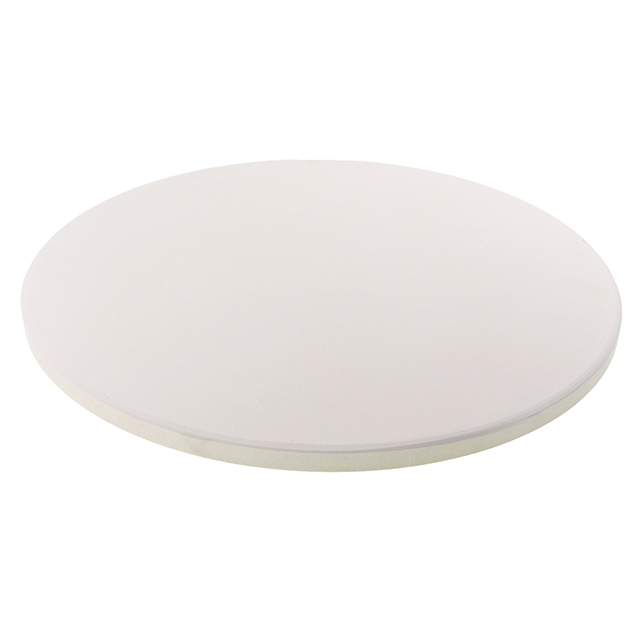
Convection airflow is the hidden engine of a successful bake. If your stone is too large, it chokes off the airflow rising from the firebox. If it is too small, the pizza is exposed to direct flames creeping up the sides. The circular geometry of the TOPQ Round Pizza Stone perfectly contours to the shape of standard kamado domes. It provides ample surface area for a standard 12-inch pie while leaving a crucial gap around the outer edges. This precise sizing allows convective heat to roll seamlessly over the top of your food.
While the ambient air temperature inside the grill dome might read 400°C, the ideal surface temperature for the stone itself should be closely monitored. You should aim for a surface temperature between 315°C and 370°C. If the stone exceeds 400°C, the bottom of the pizza will burn before the toppings finish cooking. Always use an infrared surface thermometer to verify the exact temperature before launching your dough.
No, you must never apply oil or cooking sprays to a ceramic or cordierite surface. Because the material is highly porous, it will absorb the oil deep into its core. When exposed to extreme heat, that trapped oil will instantly reach its smoke point. This creates acrid, foul-tasting black smoke that ruins the flavor of your food and poses a severe fire hazard. Rely on extreme heat and a light dusting of semolina flour on your peel to prevent sticking.
Never use chemical soaps or detergents on your baking stone. The porous material will absorb the soap, and your subsequent pizzas will taste like cleaning chemicals. Furthermore, soaking the stone in water introduces deep moisture that causes thermal shock and cracking the next time you heat it. To clean the stone, simply let it cool completely, scrape off any carbonized food debris with a dry metal spatula, and wipe it down with a lightly damp rag. The extreme heat of the grill acts as a natural sterilizer during every use.
One of the most common mistakes is launching a pizza as soon as the dome thermometer hits 400°C. Ambient air heats up much faster than solid ceramic mass. Even if the dome is hot, the stone may still be relatively cold. You must allow the stone to heat soak in the grill for a minimum of 45 to 60 minutes. This gradual preheating ensures the core of the stone is fully saturated with thermal energy, providing an even, consistent bake.
Absolutely not. Standard culinary parchment paper has a maximum temperature rating of roughly 232°C. If you introduce parchment paper into a 400°C kamado grill, it will instantly ignite and turn to ash, ruining your pizza and creating a serious fire hazard. You must rely on a properly heated stone and semolina flour for a clean launch.
If your stone is covered in thick, blackened cheese or burnt sauce, do not attempt to scrub it with water. Instead, perform a high-heat burn-off. Flip the stone over so the dirty side faces down toward the hot coals during your next cook. The intense direct heat will incinerate the organic matter, turning it into a fine white ash that you can easily brush away once the stone cools.
A heavy-duty kamado grill is a formidable piece of thermodynamic equipment, highly capable of replicating the intense 400°C environment of a commercial wood-fired pizza oven. By utilizing the double indirect method, managing your dough hydration with precision, and respecting the physics of thermal shock, you can consistently deliver pizzas with perfectly blistered, crispy crusts.
Mastering high-heat baking is an iterative process that rewards technical precision. It requires strict temperature control and a bit of practical experience with the pizza peel. Equip yourself with reliable, industrial-grade tools, respect the intense heat, and your backyard will soon outpace your favorite local pizzeria. Stop risking your cooks on inferior ceramics. Upgrade your outdoor kitchen setup with premium ceramic accessories from TOPQ today to experience the ultimate wood-fired difference.


