


Views: 0 Author: Site Editor Publish Time: 2026-11-11 Origin: Site


When stocking premium outdoor cooking equipment, the visual appeal of your inventory is just as important as its culinary performance. For outdoor living retailers and home and garden centers, the specific Ceramic Grill Texture you choose to display can make or break a high-ticket sale. Customers today are not merely buying a functional charcoal cooker. They are investing in a permanent architectural centerpiece for their backyard oasis.
This comprehensive guide explores the critical differences between popular exterior finishes. We will analyze how these structural patterns impact long-term durability and how you can leverage them in your showroom to maximize conversions. Understanding these material nuances is the key to matching the right product with the right buyer. Whether you are actively deciding between a traditional dimpled surface or a sleek geometric design, this deep dive provides the engineering and merchandising insights you need.
Key Takeaways
Aesthetics Drive Sales: The appropriate exterior finish instantly communicates craftsmanship and style. This heavily influences a consumer's purchasing decision directly on the showroom floor.
Texture Varieties Matter: Understanding the distinct structural and visual benefits of the classic dimpled look versus modern faceted designs allows retailers to cater to diverse demographic tastes.
The Power of the Coating: A high-quality vitreous enamel protects the porous ceramic core from environmental degradation. It also enhances color depth for a striking retail presentation.
Merchandising is Key: Strategic lighting, tactile engagement, and contextual staging in your retail environment highlight unique surface patterns. This draws customers in and effectively justifies premium price points.
In the highly competitive landscape of outdoor living retail, capturing a consumer's attention within the first few seconds is absolutely critical. Imagine a customer strolling past a row of standard stainless steel gas ranges. Their eyes often glaze over the uniform and flat metal. Suddenly, a deeply textured and vibrant ceramic dome catches the overhead track lighting. This interplay of light and shadow creates visual depth. It effectively stops browsing shoppers in their tracks. Unlike flat metal alternatives, a textured ceramic surface presents a dynamic visual profile that elevates the entire aesthetic of your retail floor.
Furthermore, pricing strategies in this sector rely heavily on perceived value. Textured ceramic inherently feels more luxurious, substantial, and robust than smooth mass-produced appliances. Do consumers understand the manufacturing difficulty? Often, they do not. However, the complex process required to press, mold, and fire these intricate patterns intuitively justifies a higher price point in the consumer's mind. When retailers effectively showcase these distinct finishes, they provide tangible evidence of artisanal craftsmanship. This helps sales teams position these cookers as long-term investments rather than disposable seasonal items.
High-ticket retail sales are frequently driven by sensory engagement. Encouraging customers to physically touch the grill is a proven psychological trigger that builds an immediate sense of ownership. Imagine a potential buyer running their hand over the cool and glass-like ridges of a faceted dome. The tactile feedback provided by a distinct exterior finish creates a memorable interaction. This significantly enhances product desirability and builds trust in the material's durability.
Recent industry analyses of the outdoor living sector reveal a fascinating shift in consumer behavior that retailers must note. Homeowners increasingly treat their backyards as seamless extensions of their interior living spaces. As a result, the demand for design-forward and architectural appliances has surged significantly.
Market data indicates a clear divergence in buyer preferences. Traditional textures maintain a fiercely loyal following among heritage barbecue enthusiasts and those with classic rustic patio designs. However, the year-over-year growth for geometric and modern finishes is accelerating rapidly. This spike is particularly evident among millennial homeowners and professional landscape architects investing heavily in premium hardscaping, poured concrete countertops, and minimalist patio renovations. To remain competitive, modern retailers must adapt their inventory to reflect this architectural evolution.
The traditional dimpled exterior is widely known in the industry as the Peanut Finish. It represents the historical standard in kamado manufacturing. This surface is defined by a heavily indented texture that closely resembles the organic and bumpy shell of a peanut. Created during the meticulous molding process before the heavy mullite clay is fired, this continuous pattern of small rounded indentations across the entire exterior is recognized globally as the classic hallmark of authentic ceramic charcoal cookers.
From an engineering perspective, early iterations of imported kamados utilized this dimpled design to help manage the thermal expansion and contraction of the material under extreme heat. Today, modern engineering has vastly improved the underlying clay formulas to prevent thermal shock. Yet, this finish remains a powerful visual nod to the rich history of charcoal grilling. It evokes a strong sense of nostalgia and proven reliability. This appeals deeply to culinary purists who respect the origins of kamado cooking.
Practically speaking, the dimpled surface offers distinct everyday advantages for the end-user. The irregular indentations are highly effective at hiding minor smudges, stray charcoal ash, and standard outdoor dust. This means the cooker maintains a clean appearance between thorough washings. When positioning this classic look on the sales floor, retail associates should target traditionalists and buyers replacing older models. Emphasize heritage, proven durability, and low-maintenance aesthetics.
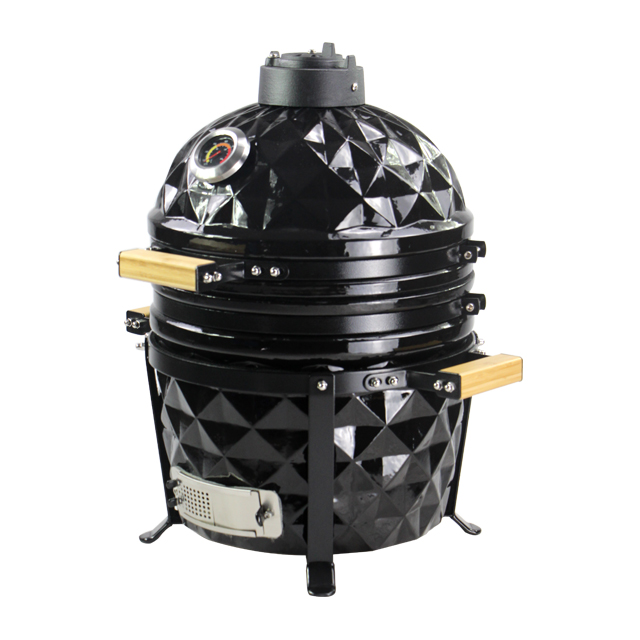
As outdoor kitchen designs have evolved toward modern aesthetics, advanced manufacturers have introduced contemporary textures to match this architectural shift. The Diamond Finish is a geometric and faceted design that brings a sharp and sophisticated edge to ceramic grills. Instead of rounded dimples, this surface features a repeating pattern of raised diamond-shaped facets.
Consider the precise engineering behind these modern units. For instance, compact models featuring a 15-inch cooking grid are specifically designed for urban balconies and minimalist patios. The precision-molded exterior transforms the traditional heavy-duty cooker into a highly sophisticated modern appliance. The sharp angles create unique light reflections and dynamic shadows that shift as the sun moves across a patio. This intricate interplay of light gives the unit an upscale appearance that closely resembles cut masonry or high-end architectural tiles.
Beyond its striking appearance, the faceted design offers practical consumer benefits. The geometric planes are generally wider and smoother than traditional deep dimples. This makes the exterior remarkably easier to wipe down with a damp microfiber cloth. Springtime pollen and dust are far less likely to become trapped in tight crevices. Retailers should actively target luxury homeowners and design-conscious buyers when pitching this contemporary style. Position this texture as a premium architectural focal point that integrates flawlessly with stainless steel and sleek composite decking.
While the underlying thick clay walls provide the legendary heat retention kamados are known for, the exterior Glaze is what ensures decades of longevity. The glazing process involves applying a specialized liquid vitreous enamel to the textured body. The unit is then fired in a kiln at extreme temperatures often exceeding 2000 degrees Fahrenheit.
This intense firing process vitrifies the coating. It transforms the liquid into a hard and glass-like shell that permanently bonds to the core. A premium vitreous coating is the absolute primary defense against harsh outdoor environments. Unsealed clay is inherently porous and susceptible to moisture absorption. Moisture intrusion can lead to catastrophic cracking during winter freeze-thaw cycles. The fired enamel prevents moisture intrusion entirely. Additionally, high-quality coatings are chemically formulated to be UV-resistant. This ensures that the vibrant colors do not fade or chalk even after years of direct sunlight exposure.
Specifically, the interaction between the liquid enamel and the underlying surface pattern creates the final visual character of the product. On a traditional dimpled finish, the enamel pools in the deep indentations. This creates a subtle two-tone effect that adds incredible depth and richness to the color. In contrast, on a faceted diamond design, the coating stretches taut over the raised geometric edges. This tension creates high-gloss highlights that reflect light sharply, enhancing the modern aesthetic.
A very common consumer inquiry on the sales floor revolves around whether the physical surface pattern impacts the unit's ability to withstand the elements. Objectively, both traditional and modern finishes offer identical weather resistance when manufactured to strict industry standards. The structural defense comes entirely from the thickness of the clay walls and the integrity of the fired glass-like shell. Neither design compromises the cooker's all-weather capabilities.
To help your sales team guide customers effectively, utilize the following comparative breakdown of the two primary textures:
Feature | Peanut Finish | Diamond Finish |
|---|---|---|
Architectural Match | Rustic, Traditional, Natural Stone | Modern, Minimalist, Poured Concrete |
Cleaning Ease | Requires occasional soft brushing for deep crevices | Quick wipe-down due to wider geometric planes |
Visual Dynamic | Deep color pooling, organic curves | High-gloss highlights, sharp light reflection |
Target Demographic | Heritage BBQ enthusiasts, Classic homeowners | Design-conscious buyers, Landscape architects |
When evaluating long-term wear and tear, the firing temperature of the protective shell is the true determining factor. Both surface patterns hold up exceptionally well against accidental scratches from metal grill tools. The raised edges of the geometric design are engineered to be structurally sound and are not inherently more prone to chipping than the rounded dimples.
Effective merchandising relies heavily on strategic lighting to accentuate physical features. In a Retail Display, flat and uninspired overhead lighting can completely wash out the intricate details of a premium cooker. To optimize the presentation of a geometric faceted finish, utilize directional LED spotlights angled at 45 degrees from above. This casts sharp and dramatic shadows across the facets, highlighting the modern architecture of the unit. Conversely, for a traditional dimpled surface, warm and diffused floodlighting works best to emphasize the deep pooling of the color.
Contextual staging helps customers instantly visualize the product in their own homes. Stage a modern faceted grill next to brushed stainless steel cabinetry or sleek concrete pavers. On the other hand, display a traditional dimpled model alongside rustic reclaimed wood tables or natural flagstone to highlight its rugged heritage.
Because the tactile experience is a major conversion driver, your showroom environment must invite physical interaction. Create clear point-of-purchase signage that explicitly encourages customers to touch the surface. Accompany this signage with brief bullet points explaining the manufacturing process. Removing the invisible physical barrier between the consumer and the product builds immediate rapport.
Inventory selection should always be driven by a clear understanding of your local market demographics. Striking the absolute right balance in your inventory minimizes stagnant stock and maximizes cash flow. For a standard outdoor living center, a balanced approach is highly recommended. Dedicate roughly 60 percent of inventory to the universally recognized traditional textures. Utilize the remaining 40 percent for modern faceted designs to capture the growing contemporary market segment.
Surface pattern and color variations present excellent organic pathways for upselling. A customer may enter the store fully intending to purchase a standard entry-level metal grill. By walking them over to a beautifully staged vignette and allowing them to physically interact with a premium textured dome, sales associates can effortlessly pivot the conversation. You shift the focus from basic functionality to backyard aesthetics and generational longevity. The unique visual appeal of these high-end finishes very often justifies the price jump to a flagship ceramic model.
Choosing the right exterior finish to stock is far more than a mere cosmetic decision. It is a highly strategic retail choice that directly impacts your merchandising capabilities, customer perception, and ultimately your bottom line. By deeply understanding the distinct architectural advantages of the classic dimpled finish and the contemporary faceted design, you can expertly guide your customers toward the perfect purchase. Emphasize the protective beauty of the high-temperature vitreous enamel to build trust in the product's longevity.
Are you ready to elevate your retail space with premium outdoor cooking equipment that drives high-ticket sales? Curate a diverse selection of ceramic cookers that offer both exceptional culinary performance and breathtaking backyard aesthetics. To explore industry-leading designs, including the precision-engineered Diamond Texture series and classic heritage models, visit topqgrill.com to find the perfect inventory match for your demographic.
No. The exterior surface pattern does not impact the unit's internal heat retention, airflow, or cooking capabilities in any way. The texture is engineered strictly for exterior aesthetic appeal, structural durability, and providing a premium tactile experience for the user. The thick mullite-based clay walls handle the actual thermal dynamics.
Generally speaking, the modern faceted finish is slightly easier to wipe down. Its geometric planes are wider and shallower than the tight dimples of a traditional finish, allowing a cloth to pass over them smoothly. However, because a high-quality firing process makes the surface glass-like, both styles are relatively easy to maintain with just a damp microfiber cloth and mild soapy water.
Premium models utilize a high-temperature fired vitreous enamel specifically formulated to resist harsh UV rays and extreme weather elements. While extremely cheap unbranded models might suffer from fading or chalking, high-quality units will retain their vibrant color depth and glossy finish for decades, even in direct sunlight.
Use directional LED track lighting to cast deliberate shadows that make the surface patterns visually pop. Place the units at waist-to-chest height on sturdy carts or islands so customers can easily reach out and touch the finish. Use clear signage to explain the aesthetic and functional differences between the traditional and modern designs.
No. The structural integrity of the thick clay walls and the immense strength of the protective fired shell are what prevent chipping and cracking, not the exterior surface pattern. Both designs are highly durable and exceptionally resistant to standard impacts when manufactured correctly and handled with reasonable everyday care.
No. The texture of the grill does not dictate the type of cover needed. Both traditional dimpled and modern geometric finishes benefit equally from a high-quality, breathable, and waterproof vinyl or polyester cover. The cover protects the external hardware and keeps environmental debris off the vitreous enamel, regardless of the surface pattern.
Yes. Premium ceramic grills are fired at temperatures exceeding 2000 degrees Fahrenheit, which completely vitrifies the enamel glaze. This creates a non-porous barrier that prevents moisture from seeping into the clay core. Because moisture cannot enter and expand during freezing conditions, both dimpled and faceted textures are completely safe to leave outdoors and use during harsh winter months.


