


Views: 0 Author: Site Editor Publish Time: 2026-11-17 Origin: Site


Picture this. The delivery truck finally pulls away. A massive, heavy crate sits on your driveway. You spend the next hour carefully unboxing your brand-new grill. You are already dreaming of slow-smoked brisket and seared ribeyes. But as you lift the heavy ceramic lid, your heart sinks. The internal fire bowl is split right down the middle.
Receiving a broken unit right out of the box instantly ruins the excitement of outdoor cooking. Worse still is hearing a loud, ominous pop during your very first cook. Why does this happen?
From an engineering standpoint, premium grills are built to withstand extreme cooking environments. However, their internal components remain highly susceptible to physical trauma during shipping and handling. In this comprehensive guide, we will explore the exact mechanics behind these fractures. You will learn how to distinguish between harmless manufacturing blemishes and severe transit damage. Furthermore, we will outline the exact steps needed to get your barbecue setup running safely.
Material Vulnerability: The core component of your grill prioritizes exceptional heat retention over physical impact resistance.
Hidden Damage: Inadequate handling procedures often cause invisible micro-fractures during transit.
The Heat Catalyst: Rapid temperature fluctuations during initial use force shipping-induced micro-fractures to expand into visible cracks.
Defect vs. Damage: Distinguishing between a harmless manufacturing blemish and severe shipping damage is essential for warranty claims.
Action Plan: Prompt inspection upon delivery is critical. Sourcing a proper replacement part ensures long-term cooking safety.
To comprehend why shipping is such a hazardous process for heavy cookers, we must analyze the material science. The engineering of these units involves a delicate balance between extreme thermal efficiency and physical fragility.
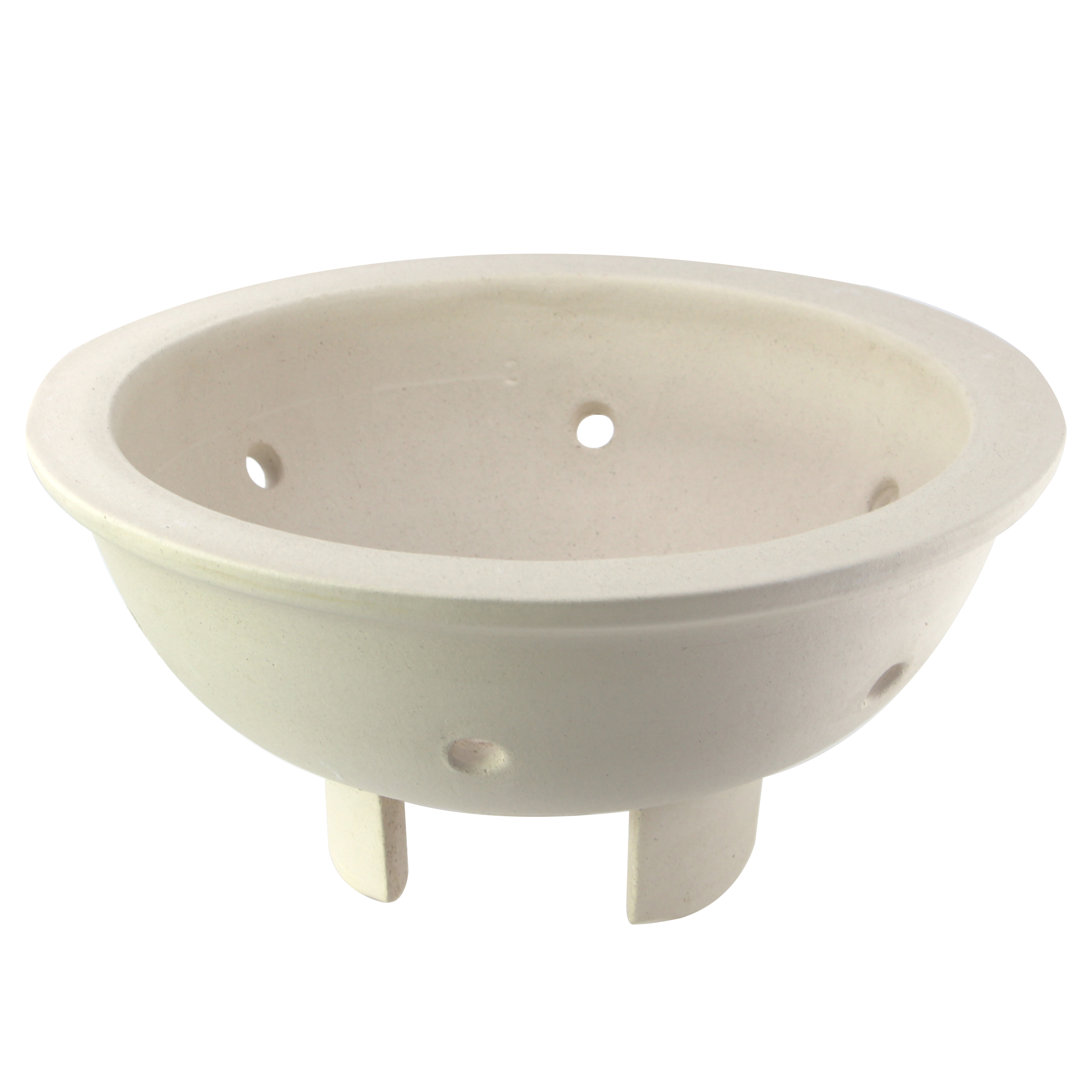
Most modern ceramic grills utilize a specific mineral compound. In the realm of high-performance ceramics, Cordierite ceramic parts represent the industry standard. This material features an exceptionally low thermal expansion coefficient. For instance, premium components from TopQ are engineered with a 20mm to 25mm wall thickness. They are specifically formulated to withstand continuous thermal cycling up to 1000 degrees Celsius.
When you are cooking low and slow for 12 hours, this specific chemical property allows the material to absorb and radiate thermal energy consistently. Instead of allowing energy to dissipate, the ceramic matrix reflects it back toward the cooking grate.
These thermal advantages come with a significant mechanical compromise. High-heat ceramics lack tensile strength. Unlike steel or cast iron, they cannot bend or flex. They are inherently brittle.
Consequently, any sudden physical shock transfers destructive force directly into the crystalline structure. Without the ability to flex, the rigid walls risk catastrophic failure when external kinetic forces exceed the material's fracture toughness.
The logistical journey of a heavy ceramic grill is fraught with mechanical hazards. Understanding this supply chain stress highlights exactly where structural failures typically occur.
Recent industry analyses highlight a growing challenge in the heavy-goods e-commerce sector. As direct-to-consumer sales of premium outdoor kitchens surge, freight carriers struggle to adapt. Standard handling protocols are simply inadequate for fragile, heavyweight items. Supply chain experts note that transit-induced ceramic failure has prompted a massive shift in packaging engineering.
We are currently seeing a distinct industry shift toward multi-layered, shock-absorbing pallet designs. Advanced impact-indicator labels on shipping crates are becoming standard. This logistical evolution underscores a broader market realization. Building a world-class grill is only half the battle. Delivering it intact across thousands of miles is the true test of quality control.
To mitigate inherent brittleness, manufacturers engineer specialized packaging solutions. The primary defense mechanism against shipping damage is high-density packing foam. This is often combined with custom-molded cardboard inserts. The goal is to suspend the internal components and isolate them from direct external impacts.
In practice, failures in the packaging system still happen. If a shipping crate drops from a significant height, the inserts compress beyond their maximum yield point. Prolonged exposure to highway vibrations can also cause protective layers to shift. This leaves the fragile ceramic exposed to blunt force contact.
The most insidious result of shipping stress is the development of micro-fractures. A fire bowl might look perfectly intact upon unboxing. You might see a pristine surface glaze and no loose fragments.
Yet, severe shipping vibrations may have already initiated microscopic internal fractures. These invisible stress concentrations compromise the internal matrix. Consumers often assemble the grill assuming it arrived in perfect condition. They are completely unaware that the internal structure is severely weakened.
Accurate diagnosis is imperative when you spot a fissure. Determining whether it is a factory-induced flaw or transit damage dictates your next steps.
A harmless kiln crack is a superficial surface anomaly. It originates during the initial manufacturing phase. When the raw clay mixture is fired in an industrial oven at temperatures exceeding 2000 degrees Fahrenheit, the rapid curing process occasionally creates a minor separation in the glaze.
These blemishes are strictly cosmetic. They do not penetrate the full thickness of the ceramic wall. Empirical observation indicates that these superficial lines rarely expand over time.
Conversely, shipping damage presents distinct physical characteristics. Impact damage typically shows wide, jagged, and abrasive edges.
Specifically, these cracks usually run all the way through the depth of the ceramic wall. You can physically feel the separation on both the inside and outside of the bowl. If a crack runs continuously from the top edge down to the ventilation holes, it is definitively the result of kinetic impact.
Characteristic | Kiln Crack | Shipping Damage |
|---|---|---|
Visual Appearance | Thin, hairline, smooth edges | Wide, jagged, abrasive edges |
Depth | Surface level glaze only | Penetrates the entire ceramic wall |
Location | Random surface areas | Often runs from top rim to ventilation holes |
Structural Threat | None, strictly cosmetic | High risk of total collapse |
A common and incredibly frustrating scenario is unboxing a seemingly flawless grill, only to discover a massive crack immediately following the initial cooking session. This phenomenon is entirely driven by thermodynamics.
Material failure often happens when a component experiences a rapid, uneven change in temperature. When you ignite a fire inside a cold grill, the interior surface begins to heat up and expand rapidly. Meanwhile, the exterior surface remains relatively cool. This temperature differential creates immense internal mechanical stress. Preventing thermal shock is critical during the first few uses.
The intersection of shipping damage and thermal stress perfectly explains the delayed appearance of cracks. If the ceramic sustained invisible micro-fractures during transit, the material matrix is already compromised.
During that first cook, the heat does not create the initial damage. Rather, as the material attempts to expand, the thermal stress concentrates disproportionately at the microscopic fracture points. The weakened ceramic cannot withstand the expansion forces. The invisible micro-fracture violently tears open into a full structural crack. Heat simply acts as the catalyst.
Implementing a rigorous inspection protocol upon delivery is mandatory. Early detection expedites the warranty process and protects your investment.
Improper unboxing procedures can inadvertently cause damage. Always clear a flat, stable surface before opening the crate. When removing the internal protective inserts, pull them straight up vertically. Do not pry the foam sideways with tools. Lateral pressure can easily snap the fragile upper rim.
Visual inspection alone is insufficient. The most reliable method for uncovering internal structural compromises is acoustic resonance testing. Engineers commonly refer to this as the tap test.
Ensure the component is resting on a soft, dampening surface. Using your bare knuckle or a wooden spoon, gently tap the side of the ceramic wall. A healthy unit will produce a clear, resonant ringing sound. If the internal matrix is shattered from shipping stress, the acoustic wave is interrupted. You will hear a dull, flat, and lifeless thud.
Upon confirming structural damage, you must evaluate the most logical path forward. This requires an objective analysis of your specific situation.
If the damage is discovered immediately upon delivery, your primary recourse is the freight damage policy. Immediately cease assembling the grill. Take high-resolution photographs of the cracked ceramic. Ensure the jagged edges are clearly visible. Document the exterior shipping box to prove the damage occurred in transit.
There are specific scenarios where warranty coverage may not apply. Perhaps you purchased the grill second-hand. Maybe the damage was reported months after the initial delivery. In these instances, replacing the compromised component is necessary.
Utilizing a structurally failed unit can lead to total collapse during high-heat operation. This poses a severe safety hazard. Fortunately, sourcing a replacement Kamado Fire Box is a straightforward process. When selecting a new unit from trusted manufacturers like TopQ, verify the exact internal dimensions. Measure the inner diameter of your grill base, the required height, and the ash clearance space to ensure perfect compatibility.
Some users attempt to repair broken ceramics using high-temperature automotive epoxies or refractory cement. While cement can bond pieces together temporarily, you must understand the engineering limitations.
The chemical composition of the cement differs from the original ceramic. They possess different thermal expansion coefficients. Under the extreme stress of live charcoal combustion, the repaired joint expands and contracts at a different rate than the surrounding walls. Over time, this differential expansion inevitably breaks the mechanical bond.
Once you have successfully replaced your damaged component, adopting proper operational habits is essential. This will protect the new ceramic from non-shipping-related failures.
Never take a brand-new ceramic bowl to 800 degrees Fahrenheit on its first run. It is highly recommended to cure the new material. Perform three to four low-and-slow cooks, keeping the temperature under 350 degrees Fahrenheit. This gradual introduction to heat bakes off any residual moisture absorbed during manufacturing.
Proper airflow is essential for even heat distribution. If you allow ash to build up inside the lower chamber, it blocks the air vents. Blocked vents force the fire to seek oxygen unevenly, creating localized hot spots. These hot spots place uneven thermal stress on specific areas of the ceramic. Clean out your ash regularly to ensure your replacement lasts for decades.
Discovering shipping damage on your new ceramic grill is undeniably frustrating. However, it is a highly solvable issue. The materials used in these premium cookers provide unmatched barbecue performance. Unfortunately, their inherent brittleness makes the journey from the warehouse to your backyard a perilous one.
Always inspect your heavy equipment immediately upon delivery. Perform the tap test to check for invisible micro-fractures. If you need to upgrade or replace compromised internal components, do not settle for subpar materials. Browse the premium selection of ceramic components at https://www.topqgrill.com to find the exact, high-grade fit for your grill. Investing in high-quality replacement parts ensures your outdoor kitchen remains safe, reliable, and ready to deliver mouth-watering results for years to come.
If the damage is a minor, hairline kiln crack, it is generally safe to continue cooking. These do not impact structural integrity. However, if the crack goes all the way through the ceramic wall, cooking is unsafe. The structural failure can cause the internal setup to collapse during a cook. It is always best to replace a structurally compromised unit.
Yes, almost all major brands offer a robust warranty that explicitly covers shipping and transit damage. The critical factor is timing. You must report the damage immediately upon unboxing. Providing clear photographic evidence of the crack, the shipping box, and the internal packaging materials will significantly expedite your warranty claim.
The best way to prevent thermal shock is to manage temperature changes gradually. Avoid lighting your charcoal with chemical lighter fluids or high-BTU weed burners. These create intense, localized heat that severely stresses the ceramic. Gradually bring your grill up to your target temperature using natural fire starters.
You can temporarily patch a broken unit using food-safe refractory cement designed for kilns and fireplaces. However, this should only be viewed as a temporary measure. Due to the extreme heat and the constant expansion and contraction of the ceramic during normal use, glued joints will eventually degrade and fail. A full replacement is highly recommended.
When properly maintained and protected from severe physical impacts, a high-quality ceramic fire bowl can easily last a lifetime. The cordierite material does not degrade from standard cooking heat. Longevity is primarily determined by how well you manage ash buildup and avoid sudden temperature extremes.
No. You should never introduce water to the inside of a ceramic grill. The porous nature of the material absorbs moisture. If you light a fire while the ceramic is damp, the trapped water rapidly turns to steam. This rapid expansion will cause severe cracking and catastrophic structural failure.


