


Views: 0 Author: Site Editor Publish Time: 2026-08-13 Origin: Site


Urban grilling presents an inherent conflict between the desire for high-performance, high-thermal-mass ceramic cooking and the strict spatial realities of apartment or condo balconies. Standard kamados demand significant square footage, substantial structural load capacity, and strict combustible clearance. These requirements make full-sized units unviable and often unsafe for small outdoor spaces. Attempting to force a massive ceramic cooker onto a narrow cantilevered deck introduces severe fire risks and structural hazards.
Selecting a specifically engineered compact ceramic cooker resolves footprint, weight, transit, and safety constraints. By scaling down the physical dimensions and overall mass, these specialized units allow for compliant balcony installations without sacrificing professional cooking capabilities. You retain the superior heat retention and moisture control of thick ceramic walls while operating safely within the physical limits of high-rise or multi-family dwellings.
Compact kamados reduce the required operational footprint by up to 50%, making it possible to meet strict clearance codes on narrow balconies.
Safety and compliance dictate a minimum 24-inch clearance from combustible materials; smaller dimensions inherently increase this critical buffer zone.
Structural load limits are a primary failure point; mini kamados typically weigh under 100 lbs, mitigating structural risks on cantilevered balconies.
Logistics matter: lighter, smaller units are vastly easier to transport via elevators, navigate through tight doorframes, and assemble in confined spaces.
Effective airflow control in smaller units allows for highly efficient, clean combustion, minimizing smoke output and reducing neighbor disturbance.
Understanding the true space requirements of a ceramic grill means looking beyond the diameter of the cooking grate. You must evaluate the entire physical envelope. An 18-inch to 24-inch standard model demands a massive footprint when accounting for the heavy-duty cart, side shelves, and the rear clearance required for the heavy lid hinge. In contrast, 13-inch to 15-inch compact models strip away this excess bulk. The true operational footprint includes the lid-opening arc, hinge clearance, side-shelf deployment, and user access zones. A standard unit might require a 5-foot by 5-foot operational square to function safely. A Small Outdoor Kamado Grill can operate efficiently in less than half that space, allowing the user to stand comfortably without backing into balcony railings.
When planning your balcony layout, you must account for the swing radius of the dome and the space required to safely handle hot grates and ash tools. A compact unit allows you to maintain a safe working distance from the heat source without compromising the limited square footage of an urban balcony. This spatial efficiency is the primary reason compact models are the only viable option for most apartment dwellers.
Grill Category | Grate Diameter | Average Weight | Required Operational Footprint | Ideal Balcony Depth |
|---|---|---|---|---|
Standard Kamado | 18" - 24" | 200 - 350 lbs | 25+ sq. ft. | 6+ feet |
Compact Kamado | 13" - 15" | 60 - 90 lbs | 10 - 12 sq. ft. | 3 - 4 feet |
Apartment balconies are engineered with specific structural realities, distinguishing strictly between live load and dead load. Live loads are temporary, moving weights like people. Dead loads are permanent, stationary weights like heavy planters or grills. Standard ceramic cookers represent a massive, concentrated dead load. Scaling down to a compact unit achieves a weight reduction of over 150 lbs. This reduction is critical for older buildings or cantilevered structures where excessive point loads can cause structural deflection or failure. You must verify your balcony's load rating, typically measured in pounds per square foot, before installing any heavy equipment.
Transit and installation logistics present another major hurdle for urban dwellers. Moving a 250-lb ceramic egg through apartment common areas is dangerous and risks property damage. You must navigate passenger elevator weight capacities, narrow corridor navigation, and multi-person carry safety protocols. A compact unit, typically weighing under 90 lbs, allows a single person or a two-person team to safely transport the grill from the loading dock to the balcony without specialized lifting straps or dollies. This logistical advantage cannot be overstated when dealing with high-rise building management and strict move-in protocols.
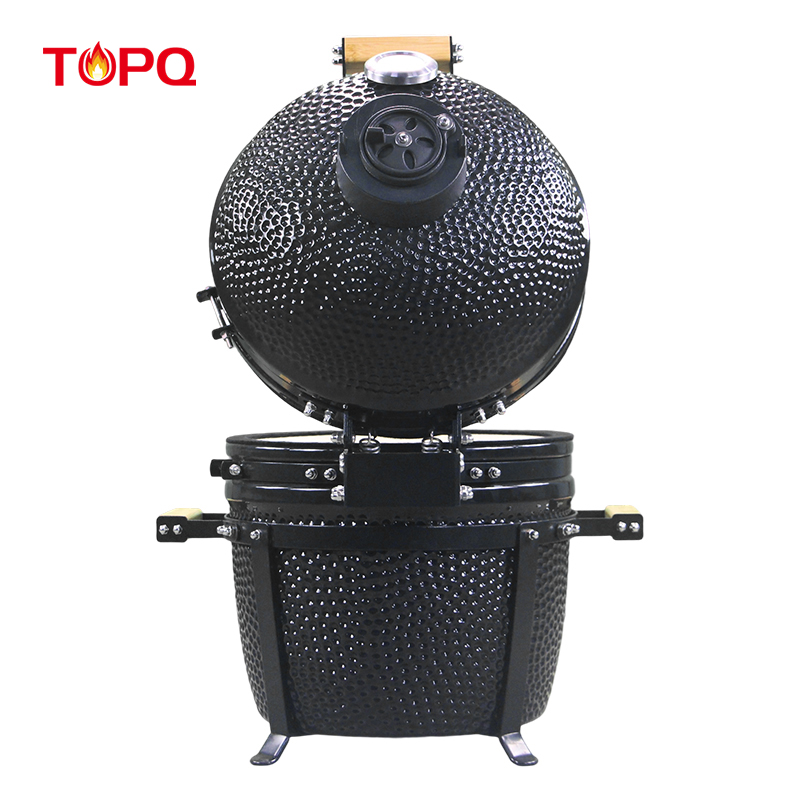
Fire safety dictates strict adherence to manufacturer guidelines and standard fire code requirements, such as those published by the NFPA. You must maintain a minimum clearance—typically 24 inches—from combustible materials. This includes wooden walls, composite decking, railings, and overhead awnings. The reduced diameter of a Compact Ceramic BBQ inherently increases your buffer zone. Because the heat source is physically smaller and contained within a tighter ceramic envelope, it prevents severe radiant heat damage to adjacent balcony structures. You can position the unit closer to the center of a narrow balcony while still satisfying the 24-inch rule.
Furthermore, the vertical clearance is just as critical as the horizontal clearance. Many balconies have combustible ceilings or overhanging balconies from the floor above. A compact unit sits lower and produces a smaller thermal plume, reducing the risk of heat damage to overhead structures. Always use a heat-resistant mat beneath the grill to protect the flooring from stray embers or hot ash during the cleaning process.
Balconies, especially on higher floors, experience significant wind shear. You must evaluate the necessity of heavy-duty, locking-caster nests or secure built-in tables to prevent tipping. A lightweight grill on a flimsy wire stand is a severe hazard in high-wind balcony environments. You need a robust support system that lowers the center of gravity and provides a wide, stable base.
Secure the grill stand or outdoor kitchen island directly to the floor or structural balcony wall to eliminate movement during high-altitude wind shear.
When installing a compact kamado into a custom-built balcony prep station, use non-combustible materials like steel or stone and ensure proper air-gap insulation around the ceramic base.
Protect balcony flooring from downward thermal transfer by utilizing ceramic feet, heat deflectors, and maintaining adequate air gaps beneath the unit.
Regularly inspect all mounting hardware and stand bolts, as thermal cycling and wind vibration can loosen connections over time.
Multi-family dwellings require strict smoke management to avoid neighbor disputes and lease violations. The reduced internal volume of a compact kamado allows for faster temperature stabilization. You achieve cleaner, more efficient combustion much quicker than with a large unit, which can smolder and produce thick white smoke for an hour while coming up to temperature. Efficient airflow is the key to urban grilling compliance.
Mitigate neighbor disturbance through precise top-vent and draft-door control. Once the charcoal is lit and the vents are dialed in, a highly efficient ceramic cooker burns extremely clean, emitting thin, blue smoke that dissipates rapidly. Framing smoke management as a critical compliance factor ensures you remain in good standing with your building management. Use high-quality, large-chunk lump charcoal to minimize sparking and excessive smoke production during the ignition phase.
Downsizing to a Mini Kamado for Small Patio involves inevitable compromises. You face a significant reduction in square inches, typically dropping from 250+ square inches on a standard model to 130–150 square inches on a compact unit. This physical limit dictates what and how you cook. You must plan your meals around the available grate space, often utilizing multi-level racks to maximize vertical capacity.
True two-zone cooking becomes difficult. You lack the lateral space to push coals to one side and roast on the other. Maximum capacity is strictly limited; fitting a whole packer brisket is impossible, though a small pork shoulder or a butterflied chicken works perfectly. Socially, these units are optimal for 2–4 people. If you plan to host large gatherings, the bulk-cooking capabilities of a Classic-sized unit are absent, forcing you to cook in sequential batches or focus on smaller, faster-cooking items like steaks and burgers.
A smaller firebox holds less lump charcoal. This reduced fuel capacity directly impacts your maximum burn times. While standard kamados can easily run for 18 hours on a single load of charcoal, compact models have a lower ceiling. You must learn to pack the firebox efficiently, mixing large and small chunks to maximize density without choking the airflow.
Determine the practical limits for overnight low-and-slow smoking. A well-packed compact unit can hold steady at 225°F for 6 to 8 hours. This is sufficient for ribs or small roasts, but attempting a 12-hour cook will likely require you to open the dome, remove the grates and deflector, and refuel mid-cook. This disrupts the thermal environment and extends the overall cooking time. Understanding these limitations allows you to plan your cooks effectively and avoid mid-session fuel shortages.
Before purchasing any live-fire equipment, identify common lease or ownership restrictions regarding open-flame and charcoal cooking on balconies. Many urban jurisdictions strictly prohibit solid fuel grills on multi-family balconies with combustible overhangs. You must do your due diligence to avoid costly fines or forced removal of your equipment.
Create a framework for verifying local fire codes and building bylaws. Request the specific strata or HOA rules in writing. Check municipal fire department regulations regarding the use of charcoal on balconies. Ignorance of the law will not protect you from severe fines or eviction if you violate fire safety codes. Always keep a copy of the relevant regulations on hand to present to building management if questioned.
Map out the optimal placement strategy. Maximize the distance from the building envelope, sliding glass doors, and HVAC intakes while maintaining safe, ergonomic access for the user. Proper positioning is critical for both safety and usability. A Balcony Kamado Grill must be placed where it will not obstruct emergency egress routes.
Follow step-by-step safety practices for unboxing and assembling heavy ceramic components carefully to avoid dropping them and damaging structural glass railings or sliding doors.
Anchor mounting stands or tables securely without puncturing the balcony’s waterproof flooring membrane by using weighted bases or tension systems if drilling is prohibited.
Implement fireproof floor mats beneath the grill to protect the deck surface from stray embers and hot ash.
Keep accessible fire extinguishing equipment, such as a Class ABC extinguisher, immediately on hand and ensure it is fully charged and within its expiration date.
Measure your proposed footprint to ensure you can maintain a mandatory 24-inch clearance radius from all combustible materials.
Verify your building regulations and local fire codes in writing before committing to a purchase.
Plan the transit route from the curb to your balcony, ensuring elevators and doorways can accommodate the boxed dimensions.
Assess your balcony's structural load capacity and select a model with a verified weight that aligns with those engineering specifications.
A: Standard fire codes and manufacturer guidelines typically require a minimum clearance of 24 inches from all combustible materials, including wooden walls, railings, and overhead awnings, to prevent radiant heat damage.
A: Yes, provided you use a fireproof floor mat, maintain the 24-inch clearance, and ensure the grill is elevated on a secure stand with ceramic feet to prevent downward thermal transfer.
A: Compact models with 13-inch to 15-inch grates generally weigh between 60 and 90 lbs, making them significantly safer for balcony load limits compared to 250-lb standard units.
A: They reach stable combustion temperatures faster due to their smaller internal volume. Once dialed in, they burn highly efficiently, producing very little visible smoke, which minimizes neighbor disturbance.
A: Use a heavy-duty stand with locking casters, or secure the base to a heavy, non-combustible outdoor table. In extreme wind areas, anchor the stand directly to the structural wall or floor.
A: Legality depends entirely on local municipal fire codes and specific HOA or strata bylaws. Many jurisdictions prohibit solid fuel grills on balconies, so you must verify regulations in writing before purchasing.


