


Views: 0 Author: Site Editor Publish Time: 2026-07-12 Origin: Site


The evolution of backyard barbecuing has shifted from basic direct-heat grilling to precision temperature management, making equipment selection a critical factor in culinary outcomes. Buyers face a massive disparity between standard metal charcoal grills and heavy-duty kamado models. The challenge is determining if the thermal performance, versatility, and longevity justify the steep initial investment. This guide provides an objective, evidence-based breakdown of thermal dynamics, fuel efficiency, flavor production, and operational trade-offs to help you determine which grill architecture aligns with your specific cooking requirements and budget. We will examine the structural differences, heat retention capabilities, and practical daily usage scenarios that define both styles of outdoor cookers.
Thermal Mass & Insulation: Ceramic construction provides superior heat retention, enabling 12+ hour low-and-slow cooks on a single load of charcoal with minimal ambient weather interference.
Fuel Efficiency: Kamado grills consume significantly less lump charcoal per hour and allow users to choke the fire to reuse unburnt fuel.
Moisture Retention & Flavor: Because they require less airflow to maintain temperature, kamados dry out meat significantly less than thin-walled metal grills and produce a cleaner, more controlled smoke profile.
Agility vs. Stability Trade-off: While kamados excel at holding steady temperatures, standard metal grills offer faster cooling, easier two-zone setups, and superior portability.
Standard charcoal grills are typically constructed from thin-walled steel or cast aluminum. These materials heat up quickly but offer minimal insulation against outside temperatures. They rely on high airflow to maintain combustion, which means a constant draft of oxygen is pulled through the bottom vents and exhausted out the top. This constant draft results in significant heat loss through the metal walls. Because they lack thermal mass, these grills are highly responsive to vent adjustments. You can open the vents to spike the heat for a quick sear or close them to cool the chamber rapidly. This agility makes them excellent for quick weeknight grilling sessions where you need to cook burgers or hot dogs and shut the grill down shortly after.
However, this lack of insulation means that metal grills struggle in adverse weather conditions. Wind, rain, and snow will rapidly pull heat away from the thin metal shell, forcing the charcoal to burn faster to maintain the internal temperature. You will find yourself constantly adjusting the vents and adding more fuel during long cooks to compensate for the heat loss. The thin metal construction also means these grills are more susceptible to rust and corrosion over time, especially if left uncovered in humid environments.
Thin-walled steel construction allows for rapid heating and cooling.
High airflow requirement leads to faster fuel consumption.
Highly responsive to vent adjustments for quick temperature changes.
Susceptible to weather interference and heat loss.
Prone to rust and corrosion if not properly maintained.
A Kamado grill is built from thick, refractory ceramic or double-walled insulated steel. It functions as a high thermal mass vessel designed to absorb, retain, and radiate heat evenly throughout the cooking chamber. The heavy walls capture heat from the charcoal and reflect it back into the food, creating a highly efficient cooking environment. They feature airtight fiberglass or felt gaskets that seal the dome to the base, preventing unwanted air leaks. Precision top and bottom venting systems allow you to control oxygen intake at a micro-level, giving you exact control over the combustion rate of the charcoal.
Modern variations include classic ceramic models and double-walled steel adaptations, though ceramic remains the standard for optimal heat retention. The sheer mass of the ceramic means that once the grill is heated to your target temperature, it will hold that temperature for hours with almost no fluctuation. This makes it an exceptional tool for long smoking sessions, baking bread, or roasting large cuts of meat. The airtight seal also means that when you are finished cooking, you can completely close the vents to starve the fire of oxygen, extinguishing the coals quickly and saving the remaining fuel for your next cook.
Thick refractory ceramic construction provides massive thermal mass.
Airtight gaskets prevent air leaks and ensure precise temperature control.
Micro-adjustable vents allow for exact oxygen management.
Exceptional heat retention for long, stable cooking sessions.
Ability to extinguish fires quickly and reuse unburnt charcoal.
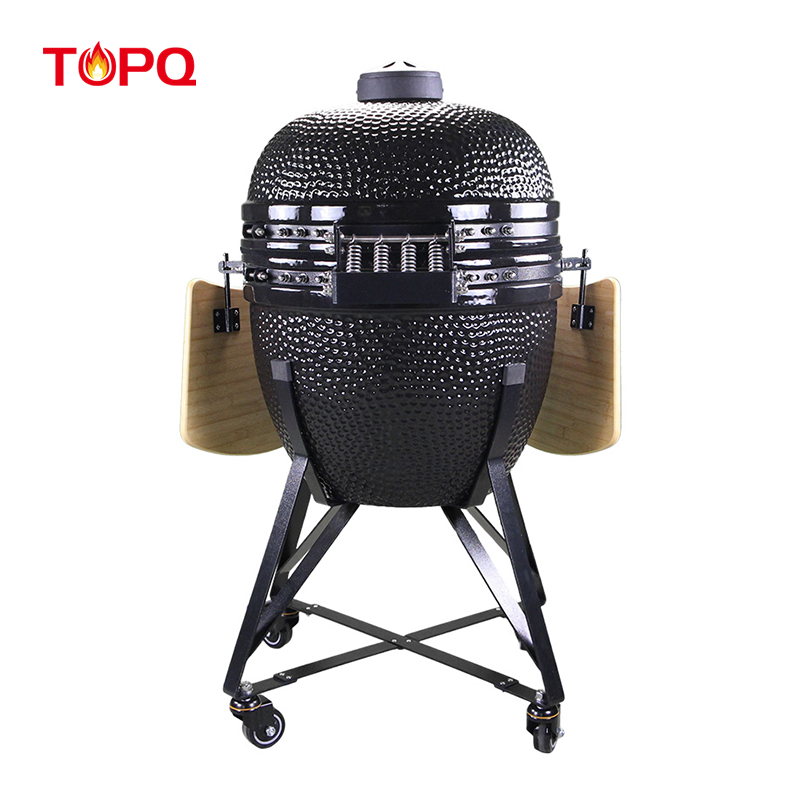
Metal grills are prone to ambient weather interference. Wind, rain, and freezing temperatures strip heat from the thin metal walls, forcing you to constantly monitor the fire and adjust vents to maintain a steady 225°F for smoking. You will often need to build windbreaks or use insulated blankets to keep a metal grill stable during winter months. In contrast, kamados deliver absolute stability. Once the ceramic is heat-soaked, the outdoor ceramic grill becomes virtually immune to external temperature fluctuations. It functions as a highly insulated oven, holding precise temperatures for hours without manual intervention. You can start a brisket at midnight, go to sleep, and wake up to find the temperature hasn't moved a single degree.
This stability is achieved through the thermal mass of the ceramic. It takes longer to heat up a kamado because the fire must first heat the thick walls before the ambient air inside the dome reaches the target temperature. However, once that energy is stored in the ceramic, it acts as a battery, slowly releasing heat back into the cooking chamber. This means the fire itself doesn't need to work as hard to maintain the temperature, resulting in a very small, smoldering coal bed that produces clean, thin blue smoke.
Metal grills require a constant, high-volume draft of air to keep briquettes lit. This draft effect continuously strips moisture from the cooking chamber and the food. As the hot, dry air rushes past the meat, it evaporates surface moisture, which can lead to dry, tough barbecue if you aren't careful. Pitmasters often use water pans, mops, and spritzes to combat this drying effect in metal offset smokers and kettle grills. A kamado requires only a fraction of the oxygen to maintain combustion. This sealed environment means reduced airflow. More moisture stays inside the meat, significantly reducing the need for spritzing or using water pans.
Performance Metric | Traditional Metal Grill | Kamado Grill |
|---|---|---|
Heat Retention | Poor (Rapid heat loss through thin walls) | Excellent (Thick ceramic absorbs and holds heat) |
Airflow Volume | High (Requires constant draft) | Low (Airtight seal requires minimal oxygen) |
Moisture Loss | High (Evaporates surface moisture quickly) | Low (Sealed environment retains meat juices) |
Weather Resistance | Low (Struggles in wind and cold) | High (Immune to external temperature swings) |
Temperature Recovery | Fast (Quickly regains heat after opening lid) | Slow (Takes time to reheat the ceramic mass) |
The low-airflow environment of a kamado creates a clean, efficient wood-smoke profile. It avoids the bitter creosote often associated with smoldering fires in poorly drafted metal smokers. Because the fire in a kamado is so small and efficient, it burns the wood chunks cleanly, producing a sweet, subtle smoke flavor that enhances the meat without overpowering it. Standard grills often run on chemical-binder briquettes that leave heavy ash and a distinct aroma that can taint the food. Kamados favor high-quality lump charcoal. This provides a pure wood flavor and a clean burn, enhancing the natural taste of your food.
Standard metal grills expose fat drippings directly to open coals. When you cook fatty cuts like ribeyes or chicken thighs, the rendering fat drips onto the hot fire, causing sudden flare-ups, soot deposits, and potential carcinogen formation on the food. You have to constantly move the meat around to avoid burning it. Kamados utilize ceramic deflector plates to shield food from direct flame. These plates sit between the fire and the cooking grate, turning the grill into a convection oven. The fat drips onto the hot ceramic deflector and vaporizes slowly and cleanly. This indirect deflection enhances flavor by sending vaporized meat juices back up into the food without causing destructive flare-ups.
Regular grills typically use briquettes, which produce excess ash. This ash can quickly build up and block the airflow in a kettle grill, suffocating the fire during a long cook. Kamados require 100% hardwood lump charcoal to prevent ash from choking the bottom draft door. Lump charcoal produces very little ash and burns much hotter and cleaner than briquettes. Kamados use significantly less fuel per hour due to their insulation. A single load of lump charcoal can easily last 18 hours at smoking temperatures. Shutting the airtight vents extinguishes the fire rapidly. This allows you to reuse the remaining lump charcoal for your next cook, drastically reducing your fuel consumption over time.
Always use 100% natural hardwood lump charcoal in a ceramic cooker.
Avoid briquettes, as the binders produce excessive ash that blocks airflow.
Fill the firebox to the top of the fire ring for long smoking sessions.
Use a chimney starter or electric lighter to ignite the coals in one spot.
Close all vents completely when finished cooking to save unburnt fuel.
Kamados dominate the low-and-slow category. They easily execute 12-to-18-hour brisket or pork shoulder cooks without ever needing to be refueled. The thick ceramic walls hold the heat steady, and the airtight seal ensures the fire burns slowly and efficiently. You simply set the vents to a narrow opening, wait for the temperature to stabilize, and let the grill do the work. Standard grills require the "snake method" or frequent manual refueling to maintain smoking temperatures. Opening the lid to add fuel increases the risk of temperature spikes and extends the cooking time by letting heat escape.
Kamados can safely reach temperatures exceeding 900°F. They function effectively as high-temperature Neapolitan pizza ovens or steak-searing stations. The ceramic handles extreme heat effortlessly, radiating it down onto the pizza stone or cast-iron grate for a perfect crust. Standard metal grills struggle to reach and hold these extreme temperatures safely. Pushing a thin metal grill to these limits without specialized vortex accessories risks warping the steel and burning off the protective enamel coating.
Cooking Method | Temperature Range | Kamado Setup |
|---|---|---|
Cold Smoking | Below 100°F | Use a smoke generator tube with no active charcoal fire. |
Low and Slow BBQ | 225°F - 275°F | Insert ceramic deflector plate, vents barely open. |
Roasting / Baking | 350°F - 425°F | Insert ceramic deflector plate, vents open halfway. |
Direct Grilling | 450°F - 600°F | No deflector plate, direct heat, vents mostly open. |
Searing / Pizza | 700°F - 900°F+ | Vents fully open, use pizza stone or cast iron grate. |
The wide, horizontal layout of a standard 22-inch kettle makes it incredibly easy to bank coals to one side. This creates distinct hot (direct) and cool (indirect) zones. You can sear a steak over the coals and then move it to the cool side to finish cooking gently. The vertical, cylindrical layout of kamados makes traditional two-zone cooking difficult. The firebox is located at the bottom center, meaning the heat rises uniformly across the cooking grate. Indirect cooking requires the insertion of a ceramic heat deflector plate. This makes mid-cook transitions between direct and indirect heat more cumbersome, as you have to physically remove the hot grate and insert the heavy ceramic plate while the fire is burning.
Metal grills are susceptible to rust, enamel chipping, and corrosion over time. This is especially true in humid or coastal environments where salt air accelerates the degradation of thin steel. Even with a cover, condensation can build up inside a metal grill and cause the grates and ash catcher to rust. Thick ceramic is inherently rust-proof, excluding the metal bands and hinges that hold the dome in place. With proper maintenance, a ceramic vessel can last for decades. The exterior glaze protects the ceramic from moisture, and the interior firebox is self-cleaning during high-heat burns.
A standard kettle grill weighs 30–40 lbs. It is easily transported for tailgating, camping, or moving around the patio to chase the shade. You can throw it in the back of a truck and take it anywhere. A standard 18-inch kamado weighs between 150 and 250 lbs. It requires a dedicated, heavy-duty stand or a built-in outdoor kitchen setup. This makes it strictly stationary. Moving a kamado across a wooden deck requires multiple people, and taking it to a campsite is entirely out of the question. Assembly also requires heavy lifting and careful alignment of the ceramic components.
Because ceramic retains heat so efficiently, accidentally letting a kamado get too hot is a major risk. If you open the vents too wide and the temperature spikes to 500°F when you wanted 250°F, bringing the kamado back down can take hours. You must catch the temperature on the way up, closing the vents before you reach your target to allow the ceramic to stabilize. Furthermore, ceramic fireboxes and domes can crack if dropped or tipped. They are also vulnerable to extreme thermal shock. Pouring cold water on hot ceramic or lighting a massive fire in a freezing cold grill can cause the ceramic to fracture.
Never use lighter fluid in a ceramic grill; it will absorb into the porous walls.
Always "burp" the grill by opening the lid an inch before fully opening it at high temperatures to prevent flash-overs.
Catch your target temperature on the way up by adjusting vents early.
Regularly check and tighten the metal bands holding the dome to prevent slipping.
Replace the felt or fiberglass gasket every few years to maintain the airtight seal.
Assess your primary cooking style to determine if you need the extreme heat retention of ceramic or the agility of a metal kettle.
Evaluate your patio's weight capacity and layout to ensure it can safely support a heavy, stationary cooker.
Review warranty terms from leading manufacturers to understand the coverage on ceramic components and metal hardware.
Commit to learning proper vent control techniques and temperature management to avoid overshooting your target heat.
A: It is highly discouraged. Briquettes contain chemical binders and produce excessive ash. This ash can quickly clog the bottom draft door, restricting airflow and ruining temperature control. Always use 100% natural hardwood lump charcoal for optimal performance and flavor.
A: A kamado typically takes 15 to 30 minutes to reach target temperatures and fully heat-soak the ceramic walls. A metal grill might reach high heat faster, but the ceramic vessel requires time to absorb the thermal energy for stable, long-term cooking.
A: While highly durable under normal cooking conditions, the ceramic can crack from physical impact or severe thermal shock. Avoid dropping the components, overtightening the metal bands, or exposing hot ceramic to freezing water.
A: Yes. The ceramic shell is highly resistant to cold weather and will not rust. However, you should use a high-quality, waterproof cover to protect the metal hinges, bands, and top vent from snow, ice, and moisture.
A: Traditional side-by-side two-zone cooking is challenging due to the vertical shape. Instead, use half-moon ceramic deflector plates to block heat on one side, creating a vertical direct and indirect setup on the same cooking grate.
A: Yes. Because kamados require less airflow, more moisture remains in the meat. The use of pure lump charcoal also imparts a cleaner, more robust wood-fire flavor without the chemical taste often associated with briquettes.


