


Views: 0 Author: Site Editor Publish Time: 2026-10-07 Origin: Site


Craving authentic wood-fired BBQ on a tiny apartment balcony? You are not alone. Limited outdoor space often makes charcoal grilling seem like an impossible dream. For apartment and condo dwellers, the desire to enjoy a perfectly seared steak or slow-smoked ribs is frequently overshadowed by concerns about spatial constraints, safety, and strict building regulations. But what if you could achieve steakhouse-quality results without violating your lease or angering your neighbors?
Let us look at recent industry shifts. Market data indicates a massive surge in demand for compact, balcony-friendly outdoor appliances over the last three years. Urban dwellers want authentic barbecue flavor without sacrificing convenience. This shift has driven the popularity of highly insulated, low-emission ceramic cookers. They fit strict apartment constraints perfectly. Why? Because they operate efficiently in tight spaces while keeping external temperatures manageable and smoke output to an absolute minimum.
In this guide, you will learn exactly how a compact ceramic cooker solves these urban grilling problems safely. We will explore cooking capacity, smoke management, and engineering parameters that make small-space outdoor cooking a reality.
Perfect for 2-4 People: A standard compact kamado easily accommodates 3 to 4 burgers, 2 large steaks, or a small whole chicken. It provides sufficient capacity for daily meals.
Safety First: Operating a live-fire grill on a terrace requires strict adherence to local HOA rules and fire codes. Regulations vary significantly by building.
Smoke Management: Utilizing high-quality lump charcoal and mastering airflow control drastically reduces smoke output. This maintains good relationships with your neighbors.
Optimal Choice: Compact ceramic models offer superior heat retention and a safer exterior shell. They are highly practical for constrained outdoor areas.
To determine if this equipment suits a small outdoor space, we must examine its core engineering principles. Unlike flimsy portable camping grills, these devices are built for serious culinary performance.
The kamado grill traces its origins back to ancient Asian cooking vessels. Modern iterations rely on distinct egg-like shapes and thick, refractory ceramic walls. Traditional metal kettle grills lose heat rapidly to the surrounding air. In contrast, the thick ceramic construction acts as a thermal battery.
This dense material traps heat and moisture inside the cooking chamber. From an engineering standpoint, this thermal efficiency means the grill requires significantly less charcoal to reach and maintain high temperatures. For balcony users, this translates to a more controlled cooking environment. You get minimal fuel storage requirements and a highly consistent internal cooking temperature, regardless of freezing winds or unexpected rain.
In the current barbecue market, sizes range from massive 24-inch models weighing over 250 pounds to highly portable units. A "mini" kamado generally features a cooking grid diameter ranging from 13 to 15 inches. The overall exterior diameter typically hovers around 15 to 16 inches. This compact footprint easily rests on a sturdy, fireproof outdoor table or a dedicated nested stand. It will not monopolize the limited square footage of a standard apartment balcony.
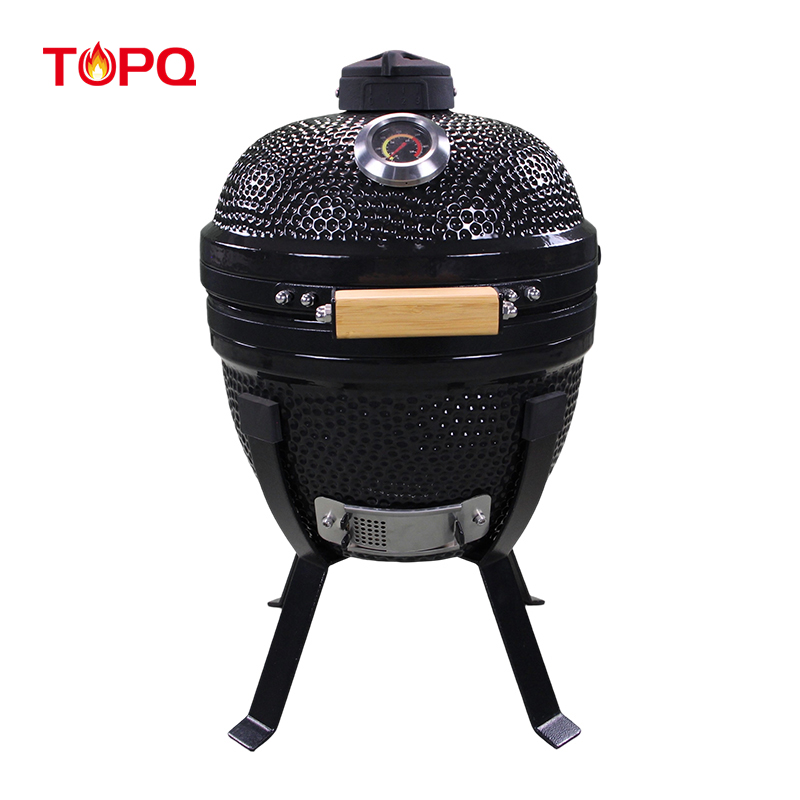
One primary concern for consumers evaluating small-scale grills is whether the cooking surface is practically usable for a standard meal. Let us break down the spatial realities.
A 14-inch diameter cooking grate provides approximately 153 square inches of cooking surface. While you will not fit a full-packer brisket here, it is more than adequate for standard daily grilling. Picture a breezy Saturday afternoon. You step onto your apartment terrace and effortlessly arrange four thick, juicy quarter-pound patties alongside a couple of corn cobs.
To provide a realistic perspective on capacity, here is an objective breakdown of what fits simultaneously on a 14-inch grate:
Burgers: 3 to 4 patties for direct grilling on high heat.
Ribeye Steaks: 2 large, thick-cut steaks for a reverse sear.
Chicken Breasts: 3 to 4 pieces for indirect grilling.
Whole Chicken: One 4 to 5 pound bird roasted over a heat deflector.
Sausages: 6 to 8 links for direct grilling on medium heat.
Based on these capacity metrics, this compact grill is perfectly tailored for solo grillers, couples, or small families. Furthermore, if you occasionally host small gatherings, the grill remains highly functional. Ceramic cookers recover heat almost instantly when the lid is closed. Therefore, you can easily cook in sequential batches without needing to refuel the firebox.
How does a ceramic cooker stack up against typical balcony options? The engineering differences are stark when evaluated side-by-side.
Feature | Mini Kamado Grill | Cheap Metal Kettle | Compact Gas Grill |
|---|---|---|---|
Heat Retention | Excellent. Thick ceramic acts as a thermal battery. | Poor. Loses heat rapidly in wind or cold. | Moderate. Relies on constant fuel flow. |
Smoke Output | Very Low. Burns lump charcoal cleanly. | High. Prone to flare-ups and dirty smoke. | Low. No charcoal smoke, but lacks wood flavor. |
Wind Resistance | High. Heavy weight prevents tipping. | Low. Easily blown over in strong gusts. | Moderate. Flames can blow out easily. |
Versatility | Grill, smoke, bake, and roast. | Basic direct grilling only. | Direct grilling and basic roasting. |
Safety and legality are the most critical factors when operating a live-fire appliance in a multi-family dwelling. Before striking a match, you must understand your local landscape.
Always consult your lease agreement, Homeowners Association bylaws, and local municipal fire codes. Many apartment complexes strictly prohibit the use of open-flame grills on combustible balconies. Some jurisdictions mandate that open-flame cooking devices be operated at least 10 feet away from combustible construction. Conversely, buildings with balcony sprinkler systems or those constructed entirely of concrete and steel often have much more lenient regulations. Verify your specific legal standing first.
If your building permits the use of a kamado grill, operational safety must be the priority. The thick ceramic exterior contains the fire much better than thin metal grills. However, the outside shell still reaches temperatures capable of causing severe burns.
Keep the grill as far away from siding, wooden railings, and overhanging plants as possible. Place a heavy-duty, fireproof grill mat beneath the unit. This protects the balcony surface from stray embers, ash, or hot grease drops. Crucially, keep a Class ABC fire extinguisher or a heavy bucket of sand immediately accessible whenever the grill is lit.
In high-density living spaces, excessive smoke is a primary cause of neighbor complaints and lease violations. Fortunately, a kamado grill operates with minimal smoke if managed correctly.
The fuel you select dictates your smoke output. Standard charcoal briquettes contain wood byproducts and chemical binders. These produce thick, acrid, white smoke. For balcony cooking, utilizing 100 percent natural hardwood lump charcoal is absolutely mandatory. High-quality lump charcoal is pure carbonized wood. It ignites faster, burns significantly hotter, and produces a very clean, nearly invisible thin blue smoke. This clean smoke is highly unlikely to bother neighbors above or beside you.
Lighting the grill improperly will create a temporary smoke bomb effect on your terrace. Never use chemical lighter fluids. They produce toxic fumes and impart a chemical flavor to your food. Instead, tuck one or two natural wax fire starters into the center of the lump charcoal. Open the bottom draft door entirely and leave the dome open for about 10 minutes. Once the charcoal catches and the initial white smoke clears, close the dome and adjust the top and bottom vents to dial in your target temperature.
Grease smoke is another nuisance in close quarters. When rendering fat drips directly onto hot coals, it vaporizes into heavy smoke. To mitigate this, trim excess fat from cuts of meat before grilling. For fattier items like chicken thighs or pork belly, utilize a ceramic heat deflector. This accessory acts as a barrier between the fire and the food. It turns the grill into an outdoor oven and prevents grease from hitting the live coals directly.
How do you choose the right model for a constrained outdoor space? You need to look at specific engineering parameters rather than just aesthetics. A proper balcony grill must balance footprint with performance.
First, evaluate the cooking grate. Look for a 14-inch stainless steel grid. It offers durability and rust resistance in humid balcony environments while providing the optimal 153 square inches of cooking space. Second, check the ventilation system. A precision cast-iron top vent is crucial for micro-adjustments in airflow. This dictates your temperature stability. Finally, examine the stand design. A heavy-duty nested stand elevates the unit safely off your prep table, providing an essential air gap for heat dissipation.
When evaluating models that fit these strict criteria, the TopQ 14-Inch Kamado Grill emerges as a highly practical solution. It integrates premium refractory ceramic with an optimized vertical footprint design. Instead of spreading out horizontally like traditional barrel smokers, it utilizes vertical space efficiently. Compared to thin-metal portable grills that rust quickly and struggle to maintain heat, this specific compact ceramic cooker offers long-term durability and professional-grade heat consistency.
Pairing your grill with the right accessories ensures a seamless, clean, and neighbor-friendly grilling experience.
Heat Deflector: This is an absolute necessity. It blocks direct flames, prevents grease flare-ups, and allows you to bake or smoke meats slowly.
Ash Tool: Balconies are prone to wind gusts. An ash tool lets you carefully scrape out cold ash into a receptacle without it blowing onto your balcony floor.
Grill Cover: Protecting the metal components from rain and humidity prevents rust. It also keeps your balcony looking tidy and compliant with aesthetic HOA rules.
Grill Mat: A silicone or fiberglass grill mat protects your balcony decking from heat, grease stains, and accidental ember drops. This ensures you get your apartment security deposit back.
A mini kamado grill is absolutely enough for balcony cooking. It bridges the gap between limited urban space and the desire for premium, wood-fired flavor. By offering sufficient capacity for daily meals, incredible fuel efficiency, and a compact vertical footprint, it transforms a tiny terrace into a legitimate outdoor kitchen.
Always check your local fire rules and HOA guidelines first. Measure your balcony, invest in high-quality lump charcoal to keep smoke to a minimum, and practice proper fire safety. Ready to upgrade your outdoor cooking game without sacrificing your entire patio space? Explore professional-grade options like the TQ0014 Mini Kamado to find the perfect fit for your home. Visit TopQ Grill today to discover how safe and delicious balcony grilling can truly be.
A 14-inch grill comfortably cooks enough food for 2 to 4 people at a time. The cooking grate provides approximately 153 square inches of surface area. This space easily holds three to four large burger patties, two thick-cut steaks, or a whole four-pound chicken. Because it recovers heat quickly, you can also easily cook in sequential batches for slightly larger gatherings.
Not if used correctly with the proper fuel. The key to smoke management is avoiding cheap charcoal briquettes and chemical lighter fluids. By utilizing 100 percent natural hardwood lump charcoal and natural wax fire starters, a mini kamado produces very little visible smoke once it reaches its target temperature. The resulting smoke is thin, blue, and clean-smelling.
While the thick ceramic walls retain heat efficiently and are generally safer than thin metal grills, the exterior still gets very hot during operation. If you are cooking at high temperatures, the outside of the ceramic will cause burns upon prolonged contact. It must be treated as an active heat source and kept out of reach of pets and small children.
Yes, ceramic kamado grills perform exceptionally well in cold weather. Unlike steel grills that can rust rapidly or warp under extreme temperature changes, high-quality ceramic withstands freezing temperatures without cracking. However, using a heavy-duty, weather-resistant cover is strongly recommended to protect the metal bands, hinges, and cast iron vents from winter moisture.
Despite their small footprint, these grills are substantial due to the density of the ceramic material. Most 14-inch models weigh between 45 to 60 lbs. While this makes them heavier than portable camping grills, this weight is actually an advantage for balcony use. It provides a low center of gravity, ensuring the grill remains stable and will not tip over during high winds.
The safest and cleanest method is using natural wax fire starters or an electric hot air charcoal starter. Never use lighter fluid. Natural starters produce minimal smoke and no chemical odors, keeping your balcony environment pleasant for you and your neighbors while protecting the flavor of your food.
Absolutely. The thick ceramic walls mimic a traditional wood-fired brick oven. By inserting a ceramic heat deflector and a pizza stone, you can easily reach the 600°F to 700°F temperatures required for authentic, crispy Neapolitan-style pizzas right on your balcony.


