


Views: 0 Author: Site Editor Publish Time: 2026-08-12 Origin: Site


Ceramic kamado cooking delivers superior thermal mass and moisture retention, but these heavy vessels often clash with the spatial limitations of townhome patios, apartment balconies, and small backyards. Buyers frequently confuse a grill's static footprint—the physical diameter of the base—with its operational footprint. The operational footprint includes the space required for safe combustible clearance, lid articulation, and heat management. Ignoring this distinction leads to severe fire hazards or completely unusable setups.
You need a technical framework to evaluate spatial requirements, structural weight limits, and safety compliance. Determining if a compact kamado is viable for your specific layout requires measuring beyond the ceramic shell. We will map out the exact dimensions, weight considerations, and mounting solutions necessary to integrate these powerful cookers into tight outdoor spaces safely.
Operational vs. Static Space: A compact kamado requires a functional footprint 2 to 3 times larger than its physical diameter to account for safe combustible clearance and airflow.
The Micro-Class Alternative: For ultra-restricted spaces, a micro 10-inch (26 cm) portable kamado grill offers a lightweight alternative to standard 13- to 15-inch compacts.
Structural Load Realities: Even a mini ceramic kamado can weigh between 60 and 90 pounds; factoring in a heavy-duty stand or custom table, balcony load limits must be verified.
Compliance is Mandatory: HOA regulations and municipal fire codes strictly govern the use of charcoal appliances on multi-family patios and wooden decks.
Capacity Trade-offs: Maximizing patio space means sacrificing grate area; a small kamado grill limits two-zone smoking capabilities and fits portions suited for 1 to 3 people.
Establishing baseline dimensions helps categorize what qualifies as "compact" in the kamado market. You cannot plan a patio layout without knowing the exact physical specifications of the hardware. Success means matching the grill's physical dimensions to your available square footage while leaving room to operate it safely. We define the compact class by looking at grate diameter, overall exterior width, and the total weight of the ceramic body. When you measure a patio, every square inch matters. A grill that technically fits in a corner might become a fire hazard once you open the lower draft door or swing the heavy ceramic dome backward.
The ultra-compact tier serves 1 to 2 people. These units feature 10-inch grates. They function exceptionally well as a Portable Kamado Grill for tabletop use. Weighing under 50 pounds, they offer mobility. You can move them from a storage closet to a patio table easily. The micro-class provides direct grilling capabilities without demanding a permanent dedicated floor space. Because the firebox is incredibly small, you use less charcoal, which translates to a smaller heat radius. However, the exterior ceramic still gets hot enough to damage plastic folding tables or untreated wood. You must place these micro units on a stone paver or a dedicated metal nesting stand, even when operating them on a sturdy outdoor dining table.
Standard compact models step up in size. They feature 13-inch to 15-inch grate diameters. Total cooking areas typically stay under 400 square inches. A Compact Kamado Grill in this class handles small roasts or a few steaks. They require a dedicated stand or a heavy-duty table. They bridge the gap between portable units and massive full-sized backyard cookers. The exterior diameter of a 15-inch kamado often pushes 20 to 22 inches when you factor in the hinge hardware and the side handles. This means a 15-inch grill actually requires a minimum of two feet of static width just to sit on the patio, before you even calculate the operational clearance needed for the operator to stand in front of it.
Physical size deceives many buyers when it comes to weight. Thick ceramic walls retain heat but add massive bulk. A Small Kamado Grill weighs significantly more than a similarly sized steel kettle. A 15-inch ceramic unit easily hits 90 pounds. You must account for this dense weight when planning patio placement. Flimsy folding tables will collapse under this load. If you plan to build a custom wooden cart, the casters must be rated for at least 150 pounds each to handle the dynamic load of rolling the heavy grill across uneven patio pavers or wooden deck boards.
Industry benchmarks vary regarding weight, hinge design, and actual footprint. Premium brands feature heavy-duty, stand-integrated designs. They dominate the premium tier with robust cast-iron or powder-coated steel carriers. Budget and import brands offer bare-bones footprint profiles. You must evaluate the included hardware. Some stands flare out at the base to prevent tipping, which increases the floor space required beyond the grill's diameter. A flared stand might add four to six inches to the total width at ground level, creating a tripping hazard in a tight 5x5 foot apartment balcony.
Physical Specifications of Compact Kamado Classes | ||||
Grill Classification | Grate Diameter | Exterior Width (w/ Hinge) | Average Weight | Primary Mounting Method |
|---|---|---|---|---|
Micro / Portable | 10 inches (26 cm) | 14 - 16 inches | 40 - 50 lbs | Tabletop Stand / Ceramic Feet |
Small Compact | 13 inches (33 cm) | 18 - 20 inches | 60 - 75 lbs | Nesting Cart / Custom Table |
Standard Compact | 15 inches (38 cm) | 21 - 23 inches | 80 - 95 lbs | Heavy-Duty Cart / Built-in |
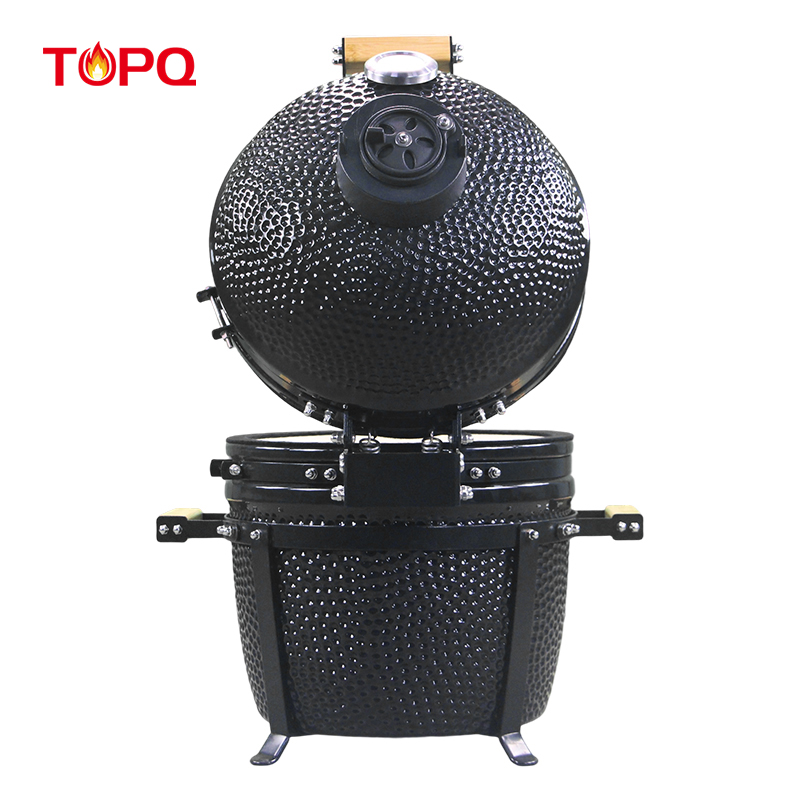
Move beyond the tape measure. Map out the actual space required to cook safely. A 15-inch grill does not simply take up 15 inches of patio space. You need room to stand, open the lid, and manage hot coals. Mapping these dimensions prevents dangerous setups. The operational footprint dictates where the grill can physically exist without melting your siding or trapping you in a corner while holding a chimney starter full of lit charcoal.
Manufacturers and fire-safety standards mandate specific clearances. You must maintain distance from vinyl siding, wooden fences, and patio furniture. Radiant heat can melt siding or ignite dry wood. Standard practice dictates at least 24 to 36 inches of clearance around the entire perimeter of the ceramic shell. Never push a hot grill flush against a wall. If your patio is only four feet deep, placing a two-foot-wide grill in the center leaves you with exactly one foot of clearance on either side. This violates basic fire safety codes and puts your property at risk. You must measure from the widest part of the grill—usually the bamboo side shelves or the rear hinge—to the nearest combustible surface.
The hinge mechanism requires spatial planning. Calculate the backward swing when the dome opens fully. The lid extends several inches behind the base. You also need vertical height clearance. Avoid placing the grill under low wooden overhangs or canvas awnings. Heat rises rapidly when you open the dome. A sudden flare-up can send flames two feet above the open grate. If you have a second-story wooden balcony directly above your patio, you must ensure the vertical distance meets local fire codes, which often require a minimum of 10 feet of vertical clearance from the cooking surface to any combustible ceiling.
Factor in the necessary square footage for workflow. You need space for safe ash removal. Charcoal storage requires a dry corner. You need a heat-resistant surface for resting hot heat deflectors. Staging food requires a side table. A cramped workflow leads to dropped food and burn injuries. When you pull a 500-degree ceramic heat deflector out of the grill to switch from indirect smoking to direct searing, you cannot hold it in your hands while looking for a place to set it down. You need a dedicated, non-combustible landing zone immediately adjacent to the grill.
Measure the static width of the grill including the stand and side shelves.
Add 36 inches to the rear for combustible wall clearance and lid swing.
Add 24 inches to the left and right sides for safe lateral clearance.
Add 36 inches to the front for the operator to stand and maneuver safely.
Verify vertical clearance to ensure no combustible overhangs exist within 10 feet.
Operating a live-fire ceramic vessel in confined areas carries severe liability risks. Embers escape. Ash drops. The outer shell gets hot enough to cause burns. You must mitigate these risks through careful placement and structural evaluation. A stray spark landing on a dry wooden deck board can smolder for hours before igniting. You must treat the area around the kamado as a designated hot zone, removing any outdoor rugs, dried potted plants, or flammable patio storage boxes.
Placing a Compact Kamado BBQ on a wooden deck requires preparation. Concrete slabs offer the safest base. If you cook on wood or composite decking, you must use fireproof grill mats. Heavy stone pavers also work. Never place the hot ceramic base directly on a combustible surface. Even if the grill is elevated on a wire stand, radiant heat pushes downward. Furthermore, when you open the bottom draft door to clear ash, hot embers frequently tumble out. A heavy-duty, industrial-grade grill mat extending at least 18 inches in front of the draft door is mandatory for wooden deck installations.
Calculate the combined weight of the grill, stand, accessories, and the operator. Compare this total against standard balcony pounds-per-square-foot (PSF) load ratings. A 90-pound grill plus a 200-pound operator concentrates significant weight in a small area. Verify your balcony's structural integrity before rolling a heavy ceramic cooker outside. Most modern residential balconies are engineered to support 60 to 100 PSF. While a compact kamado falls well within this limit, placing it on an older, weathered wooden deck requires a physical inspection of the joists. Water damage or wood rot can severely compromise the deck's ability to hold a concentrated 100-pound point load.
Municipal fire codes strictly govern solid fuel appliances. Many cities ban charcoal grills on covered patios or multi-family dwellings. HOA regulations often mirror these codes. Check your local ordinances before purchasing. Fines for violating fire codes are steep. Safety always supersedes culinary ambition. The International Fire Code (IFC) Section 308.1.4 explicitly prohibits operating charcoal burners on combustible balconies or within 10 feet of combustible construction in multi-family dwellings. If you live in an apartment or condo, you must consult your property manager. Ignorance of the fire code will not protect you from liability in the event of property damage.
Evaluating support hardware ensures the grill fits your restricted footprint safely. You have several options for elevating the cooker. Each approach offers different spatial efficiencies and aesthetic appeals. The goal is to secure the heavy ceramic vessel so it cannot tip over, while maintaining enough airflow around the base to prevent heat transfer to the supporting structure.
Wire nesting stands offer spatial efficiency. They cradle the grill securely while allowing maximum airflow underneath. Placing the grill on ceramic shoes works for non-combustible built-in outdoor kitchens. Nesting carts usually feature handles, making it easier to reposition the heavy unit on a small patio. When selecting a nesting cart, look for heavy-gauge steel construction and locking casters. A grill that rolls away on a slightly sloped concrete patio is a massive safety hazard. Engage the wheel locks the moment the grill is in its final cooking position.
Building a custom wooden surround maximizes utility. A DIY Cypress wood table provides prep space. However, you face spatial trade-offs. The table increases the static footprint. You must maintain strict air-gaps between the wood and the ceramic. Use a non-combustible paver base under the grill to prevent wood ignition. The cutout hole in the wooden tabletop must be at least two inches wider than the grill's diameter on all sides. If the ceramic touches the wood, the continuous heat transfer will eventually dry out the timber and lower its ignition temperature, leading to a spontaneous fire.
Maximize workflow while minimizing permanent storage footprints. Drop-down side shelves fold away when not in use. Extendable prep tables provide temporary staging areas. Modular double table setups work well for patio Korean BBQ and social tabletop cooking. These solutions adapt to your space dynamically. A stainless steel folding prep table can be deployed during the cook to hold raw meat and utensils, then folded flat and stored indoors. This keeps your small patio clear of clutter when the grill is not in operation.
Achieving a smaller patio footprint requires culinary sacrifices. You must analyze what you give up in capability. Smaller grates mean fewer portions. You trade volume for spatial efficiency. You cannot host a neighborhood block party with a 13-inch grate. You must align your cooking expectations with the physical reality of the hardware.
Quantify what fits on the grates. A 10-inch micro-grate holds two large burgers or a few skewers. A 13- to 15-inch grate fits a whole spatchcocked chicken or three steaks. Full racks of ribs require cutting to fit. Plan your menus around these physical limitations. If you want to cook a 12-pound brisket, a compact kamado will not work. The meat will touch the edges of the dome, blocking airflow and burning the ends of the cut. Compact kamados excel at high-heat searing for small cuts of meat, poultry, and vegetables.
Achieving true two-zone indirect cooking on a Mini Ceramic Kamado presents thermodynamic challenges. The firebox sits very close to the grate. Deflector plates help, but the radiant heat remains intense. These grills excel at high-heat searing. Low-and-slow smoking requires careful fire management. Because the charcoal basket is small, you have limited fuel capacity. A long 10-hour pork shoulder smoke might require you to reload the charcoal mid-cook, which is difficult when dealing with a hot ceramic deflector plate in a confined patio space.
Enclosed or semi-enclosed patios trap smoke. Charcoal produces heavy particulate exhaust. Consider the impact on upstairs neighbors. Home ventilation systems might pull smoke indoors if placed too close to windows. Manage your airflow and choose high-quality lump charcoal to minimize excessive white smoke. Never use lighter fluid in a kamado. The porous ceramic will absorb the chemical fumes, ruining the flavor of your food and creating toxic, foul-smelling smoke that will quickly fill a small courtyard or balcony area.
A compact kamado delivers high-performance cooking for small patios only if you prioritize operational clearance over maximum capacity. Structural support and code compliance remain non-negotiable. Base your final purchase decision on a strict sequential checklist.
Call your HOA or property manager to verify that solid fuel charcoal appliances are permitted on your specific patio.
Measure the exact dimensions of your patio and map out a 36-inch combustible clearance zone.
Inspect your wooden deck or balcony joists to confirm they can support a concentrated 100-pound point load.
Purchase a heavy-duty fireproof grill mat that extends 18 inches past the front draft door.
Select a grill size that fits within your mapped safe zone, ensuring you have room to open the dome fully.
A: It depends entirely on your local fire codes and lease agreements. Many municipalities strictly prohibit charcoal or solid fuel grills on multi-family balconies due to fire hazards. Always check regulations first.
A: Manufacturers generally recommend a minimum of 24 to 36 inches of clearance from any combustible materials, including siding, wooden fences, and patio furniture, to prevent heat damage or fire.
A: A true micro 10-inch kamado weighs around 40 to 50 pounds. Standard compact models in the 13- to 15-inch range typically weigh between 60 and 90 pounds.
A: No. The bottom of the ceramic vessel gets extremely hot. You must use a heavy-duty nesting stand or place the grill on a thick, non-combustible stone paver to prevent igniting the wood.
A: A 10-inch grate comfortably cooks for 1 to 2 people. A 13-inch grate can handle portions for 2 to 3 people, fitting a small whole chicken or a few steaks.
A: Yes, lighting charcoal produces initial heavy smoke. While it burns cleaner once at temperature, the smoke can still accumulate in enclosed patios or bother nearby neighbors.
A: You must leave a substantial air gap around the ceramic shell. Additionally, the grill must sit on a thick concrete or stone paver, never directly on the wooden base shelf.


