


Views: 0 Author: Site Editor Publish Time: 2026-10-02 Origin: Site


A Kamado grill represents a significant financial commitment to your backyard culinary setup. Pitmasters globally prize these heavy ceramic cookers for their exceptional heat retention and precise temperature control. Leaving this premium equipment exposed to the elements without a proper shield, however, guarantees rapid and costly deterioration.
Many backyard chefs make the critical error of purchasing a cheap, generic canopy. It might look fantastic on day one, only to crack, peel, and disintegrate under the harsh summer sun. The silent, invisible culprit behind this destruction is ultraviolet radiation. In this technical breakdown, we examine the exact material science of how sun exposure compromises outdoor cooking setups. We will explore why standard fabrics fail so quickly and explain how investing in a purpose-built Kamado Grill Cover serves as the most effective strategy to safeguard your grill for years to come.
When consumers purchase a protective layer for their outdoor cooking equipment, their primary concern usually revolves around heavy rain or winter snow. Meteorological data and material science reveal a harsh reality. Ultraviolet light actually acts as the single most destructive environmental factor for outdoor fabrics. Understanding how solar energy systematically degrades standard materials is the vital first step in safeguarding your investment.
Ultraviolet light consists of high-energy spectrums capable of breaking down the microscopic chemical bonds in synthetic polymers. Standard polyester and nylon, commonly used in budget-friendly covers, are highly susceptible to this chemical breakdown, known as photodegradation. When a cheap cover remains in direct sunlight day after day, high-energy photons act like microscopic scissors. They sever the polymer chains that give the fabric its inherent strength and flexibility.
The resulting condition is commonly referred to in the textile industry as dry rot. You can physically feel the damage occurring. A material that was once supple and robust loses its natural elasticity, becoming stiff and brittle while leaving a chalky residue on your hands. It entirely loses its tensile strength, meaning the fabric is fundamentally compromised at a molecular level.
Long before the fabric physically rips, the first visible symptom of sun degradation appears as severe color fading. Picture a standard cover that looks sleek and pitch-black on the day of purchase. Within just a few weeks of mid-summer exposure, it often turns into a dusty, patchy grey. This occurs because standard surface dyes lack resistance to solar bleaching. While aesthetic ruin might initially seem like a superficial cosmetic issue, it serves as a glaring warning sign. The structural integrity of your protective barrier is actively failing.
Once solar rays have baked the fabric into a brittle state, a destructive domino effect takes over. The compromised material can no longer withstand everyday mechanical stress. The simple routine act of pulling the cover off the grill creates tension. Even the friction caused by a gentle afternoon breeze flapping the fabric against the ceramic dome results in invisible micro-tears. These tiny rips quickly expand across the weakened fibers, ultimately rendering the canopy completely useless and leaving your grill bare to the elements.
A widespread misconception exists in the barbecue community regarding ceramic durability. Because Kamado grills are constructed from thick, heavy-duty ceramic, many assume they are virtually impervious to the outdoors. While ceramic itself cannot rust, the grill actually functions as a complex ecosystem of various sensitive materials. Leaving a Kamado bare without adequate shelter leads to severe structural and functional damage over time.
The exterior of a high-end Kamado grill features a specialized, weather-resistant protective glaze. While it easily handles massive internal heat from glowing charcoal, direct and prolonged exposure to the intense summer sun presents a different challenge. It can heat the dark exterior to extreme localized temperatures. This constant daily thermal cycling—heating up in the sun and rapidly cooling at night—can cause the glaze to weather or craze prematurely. Furthermore, this intense ambient heat dries out the felt or fiberglass gaskets sealing the dome. When these gaskets shrink and harden, they lose their airtight properties. That airtight seal remains absolutely crucial for the precise temperature control Kamado grills are famous for.
A ceramic cooker relies heavily on metal components to hold its heavy segmented pieces together securely. The tension bands, rear hinges, spring assists, and cast-iron top vents are typically manufactured from powder-coated steel or iron. If a sun-rotted cover tears and allows rainwater to seep through, moisture becomes trapped directly against these sensitive metal parts. In a humid outdoor environment, this trapped condensation accelerates oxidation. Within weeks, rapid and severe rust forms. This not only looks terrible but physically compromises the structural safety and hinge operation of the entire unit.
For dedicated pitmasters who store their grills outdoors year-round, winter presents a uniquely catastrophic hazard. If a sun-damaged canopy allows autumn rain or melting snow to seep into the porous unglazed sections of the ceramic, that moisture remains trapped deep inside. The internal firebox and the joints between ceramic plates are particularly vulnerable. When temperatures inevitably drop below freezing, the trapped water turns to ice and expands. This resulting hydraulic pressure is incredibly powerful. It is strong enough to crack the thickest ceramic walls, resulting in irreversible damage rarely covered by manufacturer warranties.
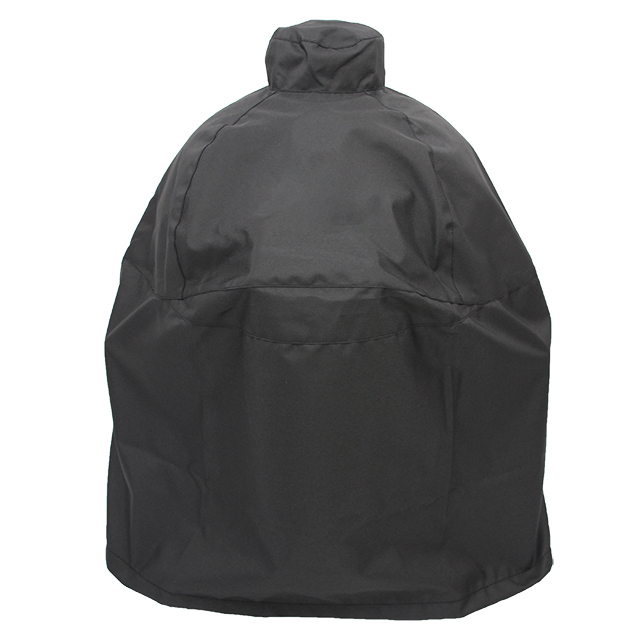
When shopping for outdoor storage solutions, consumers frequently fixate on the word waterproof while entirely ignoring ultraviolet ratings. This represents a critical error in judgment. Waterproofing and sun resistance are two entirely distinct textile technologies. For long-term outdoor storage, one simply cannot survive without the other.
Most standard covers achieve their waterproof status by applying a thin chemical layer of Polyvinyl Chloride or Polyurethane to the underside of the fabric. While highly effective at repelling water initially, these chemical coatings are extremely sensitive to thermal degradation.
When the outer fabric layer lacks adequate solar protection, penetrating rays pass right through the material and bake the delicate waterproof lining underneath. Consequently, the internal coating quickly begins to blister, peel, and flake off. Once this internal shedding happens, the cover completely loses its ability to repel water. Therefore, a cover is only capable of keeping rain out for exactly as long as its exterior protection remains intact.
While keeping rain out is undeniably essential, a high-quality protective barrier must also actively manage internal moisture. Ground moisture naturally evaporates and rises, often becoming trapped underneath a tight-fitting canopy. If that fabric is simultaneously being baked by the sun, it creates a stagnant greenhouse effect inside the dome.
This trapped heated condensation drastically accelerates mold growth on the porous ceramic grates and rust on the metal vents. To combat this effectively, premium designs incorporate strategically placed built-in air vents. These vents allow the grill to breathe, ensuring that humid condensation safely escapes while the overlapping fabric still blocks direct rainfall.
Feature | Standard Waterproof Cover | Premium UV-Resistant Cover |
|---|---|---|
Material Base | Low-denier polyester | High-denier Oxford cloth |
Protection Level | None (rapid fading and dry rot) | Advanced stabilized coating |
Waterproofing | Thin PVC layer (flakes easily under heat) | Heavy-duty PU backing |
Moisture Control | Traps condensation (causes mold) | Vented for optimal breathability |
Lifespan | 3 to 6 months | 3 to 5+ years |
Not all products heavily marketed as heavy-duty actually possess the complex engineering required to withstand prolonged brutal sun exposure. To make an informed purchasing decision that will actually protect your grill, consumers must look past marketing jargon. Examining the specific material specifications and manufacturing technologies utilized is essential.
Recent material science analyses within the outdoor living sector highlight a definitive shift in manufacturing standards. As global solar index averages climb, temporary protective solutions are becoming obsolete. The current industry trajectory heavily favors solution-dyed, high-denier technical fabrics integrated with advanced polymer stabilizers. This evolution reflects a growing demand for sustainable, multi-year durability over disposable alternatives.
The foundation of any durable shield is the raw fabric itself, usually measured in Denier. This standard unit of measurement determines the thickness and weight of the individual threads used in the creation of a fabric. Budget-friendly options often use flimsy 210D or 300D polyester.
In contrast, for genuine longevity and rugged tear strength, a heavy-duty BBQ cover must utilize high-denier Oxford cloth, such as the robust 420D or 600D variants. Thicker, more densely woven fabrics naturally block a significantly higher percentage of light from penetrating the material. Simultaneously, this dense weave provides superior resistance against wind-induced tearing and physical abrasion.
Raw fabric alone, no matter how thick, cannot stop the relentless power of the sun. During the manufacturing process of premium covers, specialized chemical treatments are applied directly to the material. These advanced treatments act very much like a high-performance sunscreen for the fabric. They are explicitly engineered to absorb and dissipate radiation before it can attack and break down the polymer chains of the Oxford cloth, significantly delaying the onset of photodegradation.
To maintain both aesthetic appeal and structural integrity over the years, high-end manufacturers utilize advanced dyeing processes. Instead of cheap surface-level dyeing where only the outside of the thread is colored, premium covers often use solution-dyed fabrics. In this meticulous process, color pigments are mixed directly into the liquid polymer before the yarn is extruded into threads. Because the color goes all the way through the core of the thread, the fabric remains highly resistant to turning white or grey, even after years of direct punishing exposure.
When evaluating outdoor storage solutions, many consumers default to the most inexpensive option available on the shelf. Purchasing outdoor gear requires a different economic calculation than buying indoor accessories. The elements act as an uncompromising stress test. From a purely financial perspective, spending a little more upfront yields significant measurable savings over time.
Many consumers fall into the trap of buying a cheap canopy, assuming it is a cost-effective quick fix. Without proper material stabilization, these covers are essentially disposable products. They typically fail, rip, or rot within six months of outdoor exposure.
If you replace a cheap cover twice a year, you spend continuously just to maintain basic protection. Over a five-year period, this amounts to hundreds of dollars spent on shredded fabric. This does not factor in the personal time and frustration of constantly monitoring, reordering, and disposing of failed covers. Conversely, a premium option requires a slightly higher initial investment but is engineered to withstand years of continuous exposure, ultimately reducing your total cost of ownership.
Beyond the cost of the canopy itself, one must seriously consider the value of the asset being protected. Kamado grills are premium precision cooking instruments, often representing a massive financial investment depending on the size and brand.
Risking a high-end ceramic cooker to save a few dollars on a flimsy tarp is an illogical economic strategy. If a cheap cover fails, replacing a rusted Kamado hinge mechanism or a seized cast-iron top vent can easily cost hundreds in replacement parts alone. Investing in quality protection is essentially buying a low-cost insurance policy for your expensive grill.
Understanding the science of material degradation and the financial implications of poor outdoor storage makes the criteria for a proper cover abundantly clear. You need a product that seamlessly combines heavy-duty fabric, advanced stabilization, and proper moisture management. When evaluating options that meet these strict empirical standards, the TOPQ BBQ Cover emerges as a highly engineered solution designed specifically for uncompromising long-term preservation.
When selecting reliable protection, you need a product engineered for harsh, unpredictable environments. The foundation of the TOPQ cover is its heavy-duty Oxford fabric, renowned for its dense weave and high tensile strength. This material undergoes a specialized treatment process to apply repellent coatings, ensuring the fabric remains flexible and strong rather than brittle and chalky. Furthermore, it features a robust Polyurethane waterproof backing specifically formulated not to flake off when exposed to high ambient temperatures. This ensures that torrential rain and melting snow are consistently repelled away from the grill’s sensitive hardware.
A frequent damaging mistake made by grill owners is utilizing a generic rectangular tarp for an egg-shaped Kamado. A poor fit directly contributes to premature fabric failure. If a cover is too loose, it acts exactly like a ship's sail, catching the wind and flapping violently. This continuous mechanical friction drastically accelerates wear and stresses the seams until they eventually burst.
This is exactly why a custom tailored fit is non-negotiable. A proper dome-shaped design naturally sheds water and prevents wind from catching excess fabric. The TOPQ design accommodates the unique geometry of ceramic cookers perfectly. Additionally, the inclusion of strategic adjustable drawstrings and buckle straps ensures the cover remains firmly anchored during severe weather events. Reinforced handles allow for safe, easy removal without stretching the fabric.
Even the highest quality treated fabrics have physical limits. While a premium cover is designed to endure harsh conditions, implementing a few simple evidence-based maintenance practices will significantly extend its functional lifespan. This ensures your ceramic grill remains pristine year after year.
The absolute simplest way to prolong the life of any outdoor fabric is to proactively reduce its total exposure to radiation. While your cover is built to handle the sun, mitigating unnecessary wear is always beneficial.
Whenever possible, position your Kamado grill in an area of your yard or patio that receives partial shade during the peak intense hours of the afternoon. Storing the grill under a patio awning, next to a tall privacy fence, or beneath a dense tree canopy can cut direct sun exposure by more than half. This drastically slows the natural oxidation process of the fabric's protective coatings.
Over the seasons, outdoor covers inevitably accumulate dust, sticky pollen, bird droppings, and acidic tree sap. If left uncleaned, these organic materials can bake into the fabric under the hot sun, creating chemical compounds that slowly eat away at the protective and waterproof layers. Routine cleaning is necessary, but it must be executed correctly.
Never place a heavy-duty grill cover in a washing machine. The violent mechanical agitation and harsh laundry detergents will permanently strip away the stabilizers and destroy the internal waterproof backing. Instead, clean the cover manually. Leave the cover on the grill to provide a firm surface. Mix a solution of lukewarm water and a few drops of mild dish soap, and use a soft-bristled brush to gently scrub away debris. Rinse it thoroughly with a garden hose and allow it to air dry completely in the sun before folding it away.
One of the most common ways consumers accidentally destroy their premium covers is thermal shock. Kamado grills are famous for their massive heat retention. The thick ceramic walls can remain dangerously hot for several hours after the charcoal has been fully extinguished.
If you hastily place a cover over a grill that is still radiating high heat, the trapped temperature will instantly melt the internal waterproof lining and can severely blister the exterior coating. Always verify that the exterior ceramic dome and the cast-iron top vent are completely cool to the touch before securing your protective canopy for the night.
Environmental damage is undoubtedly the number one enemy of outdoor storage. Standard covers quickly succumb to harsh elements, suffering from dry rot and severe fading in a matter of months. Once that fabric barrier fails, it leaves your expensive ceramic cooker highly vulnerable to invasive moisture, devastating rust, and winter cracking.
A basic budget-friendly tarp simply cannot survive outside for long. You must protect your valuable outdoor cooking investment with materials engineered to fight back against the elements. By choosing a durable, purpose-built protective option today, you save yourself the headache of frequent replacements and costly grill repairs.
Explore the premium TOPQ BBQ Cover for lasting, weather-defying outdoor protection. Evaluate your specific grill dimensions and select the appropriate tailored fit to ensure your Kamado stays in absolute pristine condition for decades of delicious backyard barbecues.
Yes. While the heavy ceramic body itself does not rust, a Kamado grill features numerous vulnerable peripheral components. The metal tension banding, the rear hinge mechanism, the bottom draft doors, and the cast-iron top vents are all highly susceptible to oxidation and rust if exposed to rain and humidity. Furthermore, if water seeps into the unglazed interior porous sections of the ceramic and subsequently freezes during winter, the expansion of the ice can cause catastrophic unrepairable cracking to the firebox or the outer dome.
The functional lifespan of a cover depends heavily on your specific regional climate conditions and local weather patterns. However, a high-quality cover constructed from heavy-duty treated Oxford fabric is engineered to last between 3 to 5 years under continuous year-round outdoor exposure. By contrast, cheap untreated vinyl or thin polyester covers often suffer from dry rot and structural failure in less than 12 months.
Yes, Kamado grills can safely remain outdoors during freezing temperatures, provided they are adequately protected. You must use a heavy-duty, stabilized, and fully waterproof cover. The cover acts as a critical thermal and moisture barrier, preventing heavy snow and ice from accumulating on the dome and melting into the hardware or thermometer seals. Always ensure the grill is completely dry before covering it for extended winter storage to prevent internal mold.
Material stabilization specifically protects the exterior fabric from sun degradation, but it does not directly prevent mold inside the grill. Mold prevention relies entirely on a different feature: breathability. If a cover is completely airtight, rising ground moisture will evaporate, become trapped under the canopy, and create a humid microclimate ideal for mold growth on your grill's grates. Ensure that your chosen cover features strategically placed air vents to allow trapped condensation to escape while still keeping rain out.
No, generic covers are highly discouraged. Kamado grills possess a unique vertical egg-like geometry. A standard rectangular gas grill cover will fit incredibly poorly. If it is too tight, the fabric will stretch and tear at the seams over time. If it is too loose, it will act like a sail, catching the wind, which causes severe abrasion against the grill and drastically accelerates the degradation of the fabric's protective coatings. Always invest in a cover specifically tailored to the unique dimensions of a Kamado.
Routine cleaning should always be done manually to preserve the waterproof backing and exterior treatments. Never use a washing machine or harsh detergents. Simply leave the cover on the grill, use a mixture of lukewarm water and mild dish soap, and gently scrub with a soft-bristled brush. Rinse thoroughly with a hose and let it air dry completely before storage.
While darker colors naturally absorb more heat, the actual resistance to degradation depends entirely on the chemical treatments and dyeing processes used during manufacturing. A premium black cover made with solution-dyed fabric and advanced polymer stabilizers will vastly outperform a lighter-colored untreated cover. High-quality engineering ensures that color fading is minimized and structural protection remains intact regardless of the specific hue.


