


Views: 0 Author: Site Editor Publish Time: 2026-06-03 Origin: Site


Every outdoor cooking enthusiast eventually faces a major bottom-of-funnel dilemma. You must choose between the "set-and-forget" convenience of a modern appliance and the hands-on authenticity of live fire. Both systems demand significant patio space and a commitment to mastering a new craft. However, they utilize entirely different combustion mechanics. These underlying physical differences dictate both the final flavor profile of your food and your daily cooking workflow. We want to strip away the marketing jargon for good. Our goal is to analyze the true physics of smoke generation, heat retention, and overall usability. We will provide a definitive framework to help you choose the right system. You can then match the hardware to your infrastructure and desired culinary outcomes.
Flavor Depth: Kamado grills deliver a distinctly richer, more authentic smoke profile due to lump charcoal combustion and minimal airflow, which locks in smoke and moisture.
Convenience vs. Craft: Pellet grills act as wood-fired convection ovens with automated temperature control, making them ideal for busy households, but they yield a noticeably subtler smoke flavor.
Versatility Caps: Kamados excel at extreme temperature ranges (225°F for smoking up to 900°F+ for pizza and searing). Pellet grills max out around 500°F, requiring secondary equipment for true searing.
Longevity & Maintenance: Kamado ceramics can last a lifetime with zero electrical dependencies, whereas pellet grills introduce moving parts (augers, fans, Wi-Fi boards) that are susceptible to wear and weather.
When assessing outdoor cookers, you must understand how they generate and manage airflow. This physical reality directly influences how your food tastes. A heavy ceramic structure acts as a massive convection insulator. These units require very little oxygen to maintain steady low-and-slow temperatures. Consequently, the internal airflow remains incredibly slow. This sluggish air movement allows dense smoke from lump charcoal and wood chunks to linger over your food. You capture a robust, authentic flavor profile. The sealed environment also traps humidity. Your meat retains significantly more moisture during long cooks.
Pellet smokers operate on a completely different mechanical paradigm. They function in a high-airflow reality. An internal fan constantly feeds oxygen to the firepot to regulate the ambient temperature. This forced-induction mechanism creates a highly efficient, clean burn. However, it also pushes smoke out of the cooking chamber very quickly. You get a subtle, mild smoke flavor. Many traditional barbecue purists criticize this result. They argue pellet units taste more like a "wood-fired oven" than a true traditional smoker.
We can verify these flavor differences across various proteins. The Kamado objectively outperforms when you want intense, bold smoke. Large cuts like beef brisket or pork shoulder benefit immensely from a heavy charcoal environment. Conversely, lighter proteins absorb smoke rapidly. If you cook poultry, fish, or simply prefer subtle flavor profiles, pellet grills offer highly consistent, gentle results.
Beef Brisket & Ribs: Benefit from heavy, lingering charcoal smoke.
Pork Shoulder: Excels in high-moisture, low-airflow environments.
Salmon & Poultry: Often shine with the gentle, clean burn of wood pellets.
Baked Goods: Do well in high-airflow pellet environments to avoid bitter soot.
Operational versatility defines the actual day-to-day utility of your backyard setup. Heavy ceramic grills boast a massive temperature band. You can easily hold them at 180°F for a delicate smoke or push them past 900°F. This dual-use capability is a major advantage. For low-and-slow sessions, you use the Minion method. You arrange unlit charcoal around a small cluster of lit coals, allowing a slow, creeping burn. When you open the vents fully, the unit transforms into an ultra-high-heat searing machine or a backyard pizza oven.
Pellet grills prioritize precision over extreme ranges. They utilize digital PID (Proportional-Integral-Derivative) controllers. These computers read the internal probe and feed pellets accordingly. They excel at ultra-low, highly stable temperatures. You can hold a pellet smoker at 170°F to 225°F indefinitely. They are perfect for overnight cooks. However, they lack direct-flame exposure. Most models max out around 500°F. True steakhouse searing becomes exceptionally difficult. You often need specialized add-on grates to mimic a proper sear.
Implementation reality often looks different from marketing brochures. Many users buy a pellet grill for convenience but quickly discover its searing limitations. They end up keeping a separate gas or charcoal grill specifically for steaks and burgers. A ceramic cooker acts as a true all-in-one replacement. You can bake a pie, smoke a turkey, and sear a ribeye on the same exact piece of hardware.
Feature | Ceramic / Charcoal Cooker | Wood Pellet Grill |
|---|---|---|
Temperature Range | 180°F to 900°F+ | 170°F to 500°F |
Searing Capability | Excellent (Direct open flame) | Poor (Indirect convection heat) |
Automation Level | Manual (Unless upgraded) | High (Digital PID controllers) |
Primary Strength | Versatility and deep flavor | Precision and convenience |
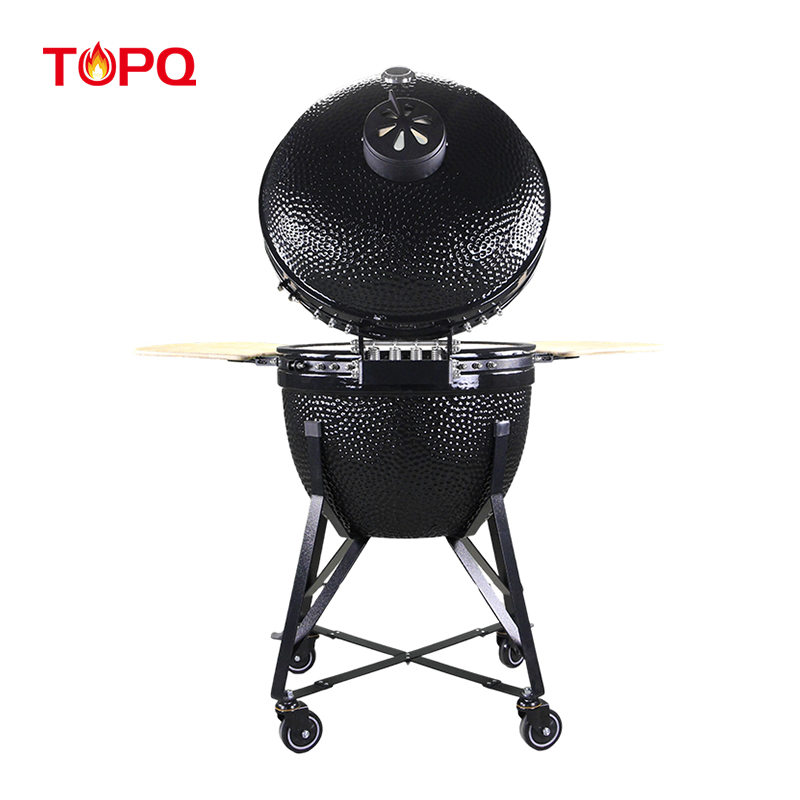
Hardware durability often dictates long-term satisfaction. Ceramic grills rely on simple physics. They utilize manual air vents and thick, heat-retaining walls. Because they lack electronic parts, you face almost zero mechanical failure risk. Properly cared for, the ceramic shell lasts decades. Pellet grills are sophisticated electronic appliances. Over time, you encounter predictable points of failure. Auger motors jam. Digital control boards short out. Igniter hot rods degrade and fail after a few seasons of heavy use.
Weather and fuel vulnerabilities also play a massive role in usability. Wood pellets are highly sensitive to moisture. If exposed to rain or high humidity, they turn to mush. This wet sawdust hardens like concrete inside the delivery tube, completely clogging the auger. Ceramic cookers burn natural lump charcoal. This fuel is highly weather-resistant. Furthermore, charcoal operation allows you to use the grill fully off-grid. You do not need an outdoor electrical outlet or Wi-Fi signal to cook dinner.
You must also consider the cleanup workflow. Maintaining a pellet smoker requires meticulous routine cleaning. You have to scrape grease traps, replace foil bucket liners, and use a wet/dry vacuum to remove ash from the firepot. If you skip this, you risk a dangerous grease fire. Ceramic maintenance is relatively simpler. You occasionally dump the bottom ash pan. After a greasy cook, you simply open the vents and run a high-heat burn-off. This turns any residual grease on the ceramic walls into white ash, essentially making it a self-cleaning oven.
Enthusiasts often attempt to merge the best features of both systems. If you own a pellet grill, you might feel disappointed by the subtle flavor profile. You can solve this pellet flavor deficit easily. Many users add an A-MAZE-N smoke tube or a similar maze accessory to the grate. You fill this metal tube with pellets, light one end, and let it smolder. It introduces supplementary, dense smoke during low-temp cooks. This simple hardware addition drastically improves the bark and smoke ring on your meats.
Conversely, charcoal purists sometimes crave the ability to sleep through a long brisket cook. You can easily solve the convenience deficit of live-fire management. Users achieve "set-and-forget" pellet-like automation by installing aftermarket thermostatic fan controllers. Brands like BBQ Guru or FireBoard offer these kits. You attach a small blower fan to the bottom vent. You place a digital temperature probe inside the dome. The controller reads the ambient heat and automatically puffs air onto the coals to maintain exact temperatures. You get profound flavor alongside digital peace of mind.
Choking the Fan: Never leave the top vent completely open when using an automatic fan controller. The fan needs slight back-pressure to regulate heat properly.
Overfilling Smoke Tubes: Do not pack supplementary smoke tubes too tightly. The wood needs basic airflow to smolder steadily without extinguishing.
Ignoring Probe Placement: Always place your digital temperature probes an inch away from the meat. Evaporative cooling from the meat will give you false low readings.
Your patio infrastructure and daily schedule matter just as much as your culinary ambitions. Neither machine functions perfectly in every single household. You need to assess your realities before committing space to a new piece of equipment. Follow this logic to finalize your decision.
You have accessible outdoor electrical outlets near your cooking area.
You are balancing a busy career or family. You need the ability to execute overnight, unattended cooking without anxiety.
You prioritize predictable, easily replicable results. You prefer guaranteed tenderness over maximum flavor intensity.
You have an alternative way to sear steaks, such as a cast-iron skillet indoors or a separate gas grill outdoors.
You want one single piece of equipment. You want to smoke a brisket at 225°F and sear a ribeye at 700°F on the same grates.
You prefer a heavy, authentic smoke profile. You enjoy the tactile experience of live-fire management.
You want a lifetime piece of hardware. You actively wish to avoid software updates, frayed wires, or replacement motors.
You want the flexibility to cook in the rain, snow, or completely off-grid without worrying about short-circuiting a motherboard.
We must reiterate that neither grill is inherently "better" than the other. They simply solve different problems for different types of cooks. The pellet grill optimizes heavily for your time and predictability. It removes the stress from barbecue. The ceramic cooker optimizes for culinary versatility, rugged durability, and a profound smoky flavor. It honors the traditional craft of fire management.
Take actionable steps before you make your choice. First, assess your typical weeknight versus weekend cooking habits. If you only have 45 minutes on a Tuesday night, automation wins. If you enjoy dedicating a Saturday to the craft, charcoal reigns supreme. Check your patio infrastructure for reliable power access. Finally, decide honestly whether you want to manage a live fire or simply press a button.
A: Yes. Once dialed in, the ceramic retains heat so efficiently that temperatures can hold steady for 12+ hours. Adding a digital fan controller makes it virtually foolproof.
A: Yes. Even though the smoke flavor is lighter, the clean combustion of wood pellets produces ample carbon monoxide and nitric oxide. These gases react with meat myoglobin to create a prominent pink smoke ring.
A: Kamado grills are vastly more efficient. The heavy ceramic insulation means they burn a surprisingly small amount of lump charcoal during a long smoke. Pellet grills constantly burn fuel to maintain heat, especially in cold weather.
A: Yes. Learning to catch the temperature on the way up and adjusting the top and bottom vents requires a learning curve. If it gets too hot, the ceramic takes a very long time to cool down.


