


Views: 0 Author: Site Editor Publish Time: 2026-07-19 Origin: Site


Outdoor cooking often forces a frustrating compromise. Traditional cookers typically make you choose between a dedicated smoker built for low-and-slow barbecue and a standard grill designed for high-heat searing. Attempting both on a single conventional unit usually results in mediocre performance across the board. Buyers looking to consolidate their outdoor kitchen need a single, high-performance unit that does not sacrifice temperature stability for long smoking sessions or peak heat capacity for grilling steaks.
The solution lies in the fundamental physics of the Kamado grill. Its thick-walled ceramic construction and unique airflow dynamics provide the structural foundation needed to bridge the gap between a high-end smoker and a high-heat grill. By harnessing advanced heat retention and precise oxygen control, this cooker eliminates the need for multiple specialized appliances on your patio.
Unmatched Thermal Mass: Heavy ceramic walls absorb and radiate heat evenly, allowing for 12+ hour smoking sessions on a single load of charcoal with minimal temperature fluctuation.
Superior Moisture Retention: The highly insulated, sealed environment requires significantly less airflow to maintain temperatures, preventing meat from drying out during long cooks.
Extreme Temperature Range: Capable of holding steady at 225°F for smoking or exceeding 750°F for steakhouse-quality searing, offering true dual-purpose utility.
Long-Term ROI vs. Initial Cost: While the upfront investment is higher than steel alternatives, the durability, fuel efficiency, and consolidation of equipment justify the cost for serious cooks.
The core advantage of this cooker stems from its refractory ceramic construction. These heavy-duty materials absorb, store, and radiate heat back into the cooking chamber with incredible efficiency. When you light a fire inside, the thick walls soak up the thermal energy. Once the ceramic is fully heat-soaked, it acts as a massive thermal battery, stabilizing the internal environment regardless of external weather conditions. We see this thermal mass at work during winter cooks. You can run a brisket overnight in freezing temperatures without the fire dying out.
Contrast this ceramic insulation with the thin-gauge steel used in standard kettle grills. Steel conducts heat rapidly, meaning it loses heat just as fast. In cold, wet, or windy weather, a steel grill struggles to maintain a steady temperature, requiring constant vent adjustments and extra fuel. The ceramic walls prevent this rapid heat loss, ensuring consistent cooking temperatures even in freezing winter conditions. You spend less time fighting the weather and more time focusing on the food.
Refractory ceramics also handle extreme temperature swings internally. The material composition resists degradation from prolonged exposure to burning lump charcoal. This means the internal firebox and outer dome maintain their structural integrity over decades of heavy use. You get a reliable cooking environment that behaves predictably every single time you light the coals.
The distinctive elliptical design does more than look unique; it drives an efficient, continuous convection current. As hot air rises from the charcoal bed, the curved dome guides it smoothly over the food and down the interior walls before exiting the top vent. This continuous loop minimizes cold spots and ensures even cooking across the entire primary grate. You do not have to constantly rotate meat to avoid burning one side.
Furthermore, the shape and the tight gasket seal create a naturally moist cooking environment. By trapping humidity inside the chamber, the design significantly reduces the evaporation of meat juices. Food cooks evenly without the harsh, dry drafts typical of drafty metal cookers. The airflow is highly restricted, meaning the air inside the dome becomes saturated with moisture from the meat itself.
This aerodynamic efficiency also impacts how smoke interacts with the food. Because the air moves slowly and deliberately, the smoke has more time to adhere to the surface of the meat. You achieve a deep, pronounced smoke ring and rich flavor profile without needing to burn massive logs of wood. A few chunks of hardwood mixed into the charcoal provide all the smoke you need.
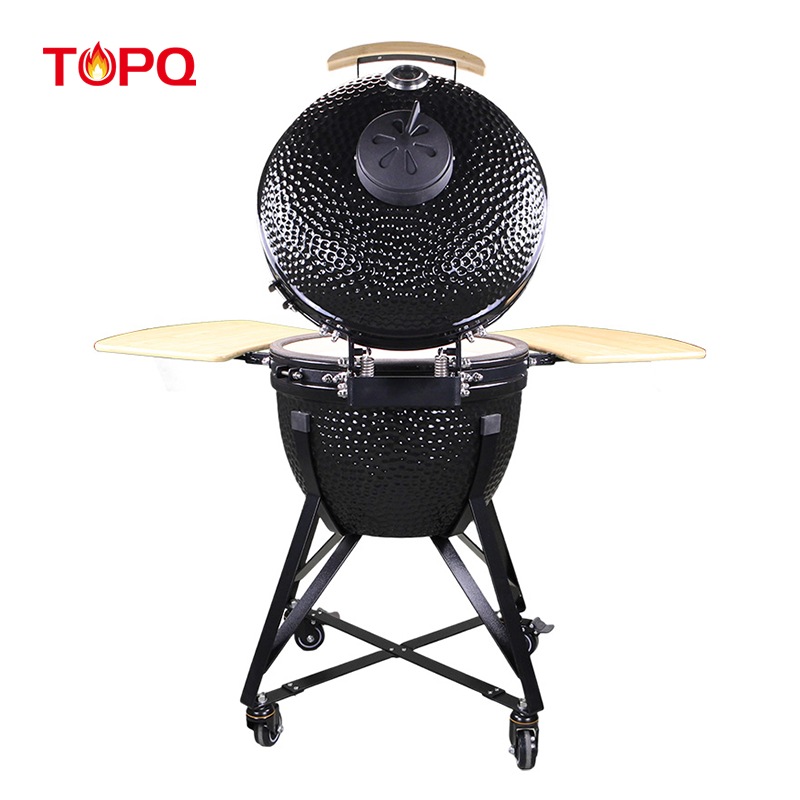
Low-and-slow barbecue requires unwavering temperature control, typically between 225°F and 275°F. You achieve this by making micro-adjustments to the bottom draft door and the top exhaust vent. A highly insulated kamado smoker grill locks in these temperatures with precision. Once you dial in the vents, the temperature simply does not move.
Once the ceramic reaches the target temperature, the cooker operates on a "set it and forget it" basis. The stability rivals automated pellet grills, but it utilizes natural lump charcoal instead of processed wood pellets. You can leave the unit running overnight for a brisket cook without worrying about sudden temperature spikes or drops. We regularly see cooks hold 250°F for 15 hours with zero manual intervention.
Target Temperature | Bottom Vent Setting | Top Vent Setting | Ideal Use Case |
|---|---|---|---|
225°F - 250°F | 1/4 inch open | Barely cracked (petals slightly open) | Brisket, Pork Shoulder, Ribs |
275°F - 300°F | 1/2 inch open | 1/4 open | Whole Chicken, Turkey, Thick Roasts |
350°F - 400°F | 1 inch open | 1/2 open | Baking, Roasting Vegetables, Casseroles |
600°F+ | Fully open | Fully open (or cap removed) | Searing Steaks, Wood-Fired Pizza |
Fuel consumption metrics for these cookers are remarkably low. A single firebox filled with high-quality hardwood lump charcoal can easily last 18 to 24 hours without any need for refueling. The heavy insulation means the fire only needs a tiny amount of oxygen to stay alive. You load the firebox once, and it carries you through the entire cook.
This efficiency translates to significant cost savings over the lifespan of the grill. When you finish cooking, you simply close both vents completely. The lack of oxygen snuffs out the fire quickly, allowing you to reclaim and reuse the remaining unburned charcoal for your next session. You waste very little fuel compared to open metal grills.
Proper charcoal selection plays a big role here. You must use natural lump charcoal, not briquettes. Lump charcoal burns hotter, produces far less ash, and responds quickly to vent adjustments. Large chunks of oak or hickory lump charcoal provide the best base for long overnight smoking sessions, ensuring steady heat and clean smoke.
In traditional offset smokers, large volumes of air constantly flow through the cooking chamber to feed the fire. This high airflow strips moisture from the meat, necessitating the use of water pans to keep the environment humid. The ceramic cooker operates differently. The sealed environment changes the physics of the cook.
Because it is so well-insulated, it requires very little oxygen to maintain a steady fire. Less airflow directly equates to less moisture being pulled away from the food. This natural moisture retention often eliminates the need for water pans entirely, yielding juicy, tender barbecue with less hassle. You get better bark formation without the meat drying out internally.
We find that skipping the water pan also frees up valuable grate space. You can fit more meat on the grill when you do not have to accommodate a large pan of liquid. The radiant heat from the ceramic walls cooks the meat evenly, while the trapped humidity bastes it continuously throughout the smoking process.
While excellent at smoking, this unit is equally capable of extreme high-heat grilling. By opening the bottom and top vents fully, you create a high-draft environment. The rush of oxygen feeds the lump charcoal, allowing temperatures to soar past 700°F safely and consistently. You can achieve these temperatures in about 15 to 20 minutes.
This intense heat is perfect for achieving a rapid Maillard reaction on steaks and burgers. The resulting crust rivals what you would get from commercial infrared sear stations at high-end steakhouses, locking in flavor in a matter of minutes. You get a deep, dark sear without overcooking the center of the meat.
Safety is paramount at these temperatures. You must "burp" the grill before opening the dome fully. Opening the lid an inch or two allows oxygen to enter slowly, preventing a dangerous flashback of flames. Once burped, you can safely flip your steaks or remove your pizzas from the blazing hot grates.
The cooking mechanics at high temperatures involve both direct and radiant heat. The glowing coals provide intense direct heat upward, while the heat-soaked ceramic dome radiates intense thermal energy downward. This dual-action cooks food faster and more evenly than standard gas grills. You get heat hitting the food from 360 degrees.
Contrast this with open-air cookers like Hibachi grills, which rely solely on direct heat from below. The ceramic cooker traps the heat, searing the top and bottom of the food simultaneously without drying out the interior. By inserting ceramic heat deflectors, you can instantly switch from this direct grilling setup to indirect roasting, allowing you to bake pizzas at 600°F with wood-fired flavor.
Cooking Method | Heat Source | Best Foods | Setup Required |
|---|---|---|---|
Direct Grilling | Coals directly below food | Steaks, Burgers, Hot Dogs, Chops | No deflector plates, grates on lower level |
Indirect Roasting | Radiant heat from ceramic walls | Whole Chickens, Prime Rib, Pork Loin | Deflector plates installed, grates on upper level |
Low-and-Slow Smoking | Smoldering coals and wood chunks | Brisket, Pulled Pork, Ribs | Deflector plates installed, vents nearly closed |
Baking | High ambient radiant heat | Pizza, Bread, Pies | Deflector plates installed, pizza stone on grates |
Offset smokers are the traditional choice for purists. However, ceramic cookers require a fraction of the fuel and almost no fire tending compared to the constant babysitting required by an offset. You do not have to add wood splits every 45 minutes. The trade-off is that offsets offer more horizontal cooking space and produce a distinct, heavy smoke flavor profile that is difficult to replicate exactly in a sealed ceramic environment.
Pellet grills offer push-button convenience and app-based temperature control right out of the box. Conversely, ceramic cookers offer a much higher maximum temperature for true searing, have no reliance on electricity, and feature fewer moving parts. There are no augers to jam or motherboards to fail, ensuring decades of reliable use. You trade digital convenience for raw power and longevity.
Kettle grills are significantly cheaper, lighter, and easier to move around the patio. However, they cannot compete with the vastly superior insulation, longevity, and cold-weather performance of a thick-walled ceramic cooker. Kettles require constant vent adjustments during long cooks to maintain steady heat. The ceramic unit holds steady without the constant fuss.
Hibachis are highly portable, footprint-friendly, and cost-effective for simple, rapid direct-heat grilling. Yet, they are strictly direct-heat, high-surveillance cookers. Ceramic units offer complete convective control, indirect heat options, and superior heat retention, making them far more versatile for diverse cooking styles. You can bake a pie in a ceramic cooker; you cannot do that on a Hibachi.
Transitioning to this style of cooking involves a learning curve. Overshooting the target temperature is a common beginner mistake, and cooling down a heat-soaked ceramic grill takes considerable time. Mastering the unit requires developing five core skills:
Proper Lighting Techniques: Always use natural fire starters. Avoid chemical lighter fluids, which will permanently contaminate the porous ceramic walls and ruin the flavor of your food.
Catching the Rise: Regulate the vents early as the temperature climbs toward your target. It is much easier to catch the temperature on the way up than to bring it down once the ceramic is too hot.
Smoke Quality Management: Learn to distinguish between dirty, bitter white smoke (which occurs when coals are first lit) and sweet, clean "blue" smoke (which indicates a clean-burning fire ready for food).
Multi-Zone Setup: Utilize expansion racks and split heat deflectors to create simultaneous direct and indirect cooking zones within the same chamber.
Extinguishment and Reclamation: Properly close both the top and bottom vents to snuff out the fire completely, preserving the remaining lump charcoal for your next cook.
Buyers must account for the physical realities of these units. They are exceptionally heavy, often weighing between 150 and 250 pounds or more. You must place them in a sturdy cart or nest. While the ceramic handles extreme internal heat effortlessly, it is brittle. Dropping the unit or subjecting it to extreme thermal shock can crack the shell. Proper delivery and assembly planning are non-negotiable. You need at least two strong people to lift the main dome into its stand.
Routine maintenance is straightforward but essential. You must clean out the ash regularly to maintain proper airflow through the bottom grate. Check the gasket seals periodically to ensure they remain airtight. Additionally, always "burp" the grill at high temperatures to prevent dangerous flashbacks caused by a sudden rush of oxygen. Maximizing the unit's potential also requires investing in key accessories like deflector plates, ash baskets, and multi-tier rack expansion systems.
Maintenance Task | Frequency | Action Required |
|---|---|---|
Ash Removal | Before every cook | Use an ash tool to scrape out the bottom chamber to ensure clear airflow. |
Grate Cleaning | After every cook | Brush the grates while they are still warm to remove food residue. |
Gasket Inspection | Every 6 months | Check the felt or fiberglass gasket for wear and replace if it leaks smoke. |
Deep Clean (Burn Off) | Once a year | Run the grill at 600°F for an hour to burn off accumulated grease and soot. |
A ceramic cooker stands as the optimal choice for outdoor chefs who prioritize versatility, longevity, and fuel efficiency. It delivers professional-level results for both low-and-slow smoking and high-heat grilling within a single footprint, eliminating the need for multiple specialized grills. You get a lifetime tool that handles everything from overnight briskets to wood-fired pizzas.
To move forward with your outdoor kitchen upgrade, follow these steps:
Measure your available patio space to ensure you have a solid, level surface capable of supporting a 200-pound cooker.
Determine your typical cooking volume to decide between a standard 18-inch model for family dinners or a 24-inch model for large backyard parties.
Select a bundle that includes ceramic heat deflectors, as these are mandatory for low-and-slow smoking and indirect roasting.
Purchase a bag of high-quality hardwood lump charcoal and natural fire starters to prepare for your first seasoning burn.
A: Yes. Thanks to its massive thermal mass and superior moisture retention, it holds low temperatures steady for 12 to 24 hours. It easily replaces a dedicated smoker for most backyard cooks, though you must adapt to vertical stacking rather than a horizontal layout for large quantities of meat.
A: There is a slight learning curve regarding vent control and fire management. Beginners often overshoot their target temperature. However, once you learn to catch the temperature on the rise and manage the vents, the cooker becomes highly predictable and stable.
A: The high cost reflects the materials and engineering. They utilize premium refractory ceramics, heavy-duty stainless steel, and cast iron hardware. This robust construction provides exceptional durability, fuel efficiency, and often comes with lifetime warranties that justify the initial investment.
A: You should strongly avoid briquettes. They contain chemical binders and produce excessive amounts of ash that can block the bottom airflow vents, suffocating the fire. Always use 100% natural hardwood lump charcoal for clean burns and optimal temperature control.
A: Due to the high thermal mass of the thick ceramic walls, it can take several hours to fully cool down after a high-heat cook. You must close both the top and bottom vents completely to cut off oxygen and extinguish the fire safely.
A: The ceramic is engineered to withstand extreme internal heat without issue. However, it is brittle against physical impact. Dropping the unit or subjecting it to severe thermal shock—such as pouring cold water on hot coals—will cause the ceramic to crack.


