


Views: 0 Author: Site Editor Publish Time: 2026-06-12 Origin: Site


Few things hurt more than pulling an expensive brisket off the smoker only to slice into dry, crumbly meat. Many backyard cooks endure this heartbreak regularly. They wrongly assume all charcoal smokers perform the exact same way. This misconception leads to endless frustration when thin-walled offset or kettle grills act as unintended food dehydrators during long cooks. You cannot fight physics with just a spray bottle.
Enter the Kamado grill. It offers a fundamentally different thermal environment designed to protect your food's natural juices. Its moisture-retaining capabilities are not marketing magic. Instead, they result directly from applied thermodynamics, material science, and superior airflow dynamics. In this article, we will explore exactly how these thick-walled cookers trap moisture. You will learn the science behind low airflow, the hidden role of fuel byproducts, and why you can finally rethink the traditional water pan.
Low Airflow is Key: High insulation requires less fuel, meaning less oxygen is needed. Slower airflow prevents moisture from being actively stripped from the meat's surface.
Ceramic Microclimates: The heavy, sealed ceramic dome traps water vapor, reaching a wet-bulb equilibrium faster than drafty metal grills.
Fuel Byproducts Matter: Natural lump charcoal releases trace amounts of absorbed water vapor during combustion, naturally humidifying the sealed chamber.
Water Pans are Optional: Unlike traditional smokers where water pans are mandatory for moisture, kamados primarily use them as heat sinks or grease catchers.
To understand moisture retention, we must first look at conventional metal smokers. Thin-walled steel or aluminum grills lack substantial insulation. They constantly lose radiant heat to the outside environment. Cold winds and low ambient temperatures easily penetrate thin metal. This continuous energy loss creates a massive deficit inside the cooking chamber.
To fight this deficit, you must burn a massive amount of fuel. Maintaining a steady 225°F to 275°F cooking temperature requires a large, active fire. A roaring fire demands wide-open air vents. These open vents pull in massive volumes of oxygen to sustain combustion. This creates a relentless cycle of high fuel consumption and high draft.
This rapid airflow acts like a powerful convection current. Fast-moving dry air passes aggressively over the meat. As it moves, it actively strips away surface moisture. We call this process evaporative cooling. It acts remarkably similar to a commercial food dehydrator. The constant breeze pulls liquid water from the meat, turns it into vapor, and immediately exhausts it out the chimney.
A Kamado completely breaks this dehydrating cycle. Its immense thermal mass means it needs very little fuel to hold high temperatures. You only need a fist-sized fire to maintain 250°F. Because the fire is small, you barely open the intake and exhaust vents. This creates minimal draft. The drastic reduction in airflow directly translates to a massive reduction in surface evaporation.
Chart: Airflow and Evaporation Comparison | ||
Feature | Thin Metal Smoker | Kamado Grill |
|---|---|---|
Insulation Level | Very Low (Rapid heat loss) | Very High (Retains radiant heat) |
Fuel Requirement | High (Large active fire needed) | Low (Small smoldering fire) |
Vent Position | Wide Open | Barely Open |
Air Velocity | Fast (Acts like a dehydrator) | Slow (Gentle convection) |
Moisture Loss | Severe surface evaporation | Minimal surface evaporation |
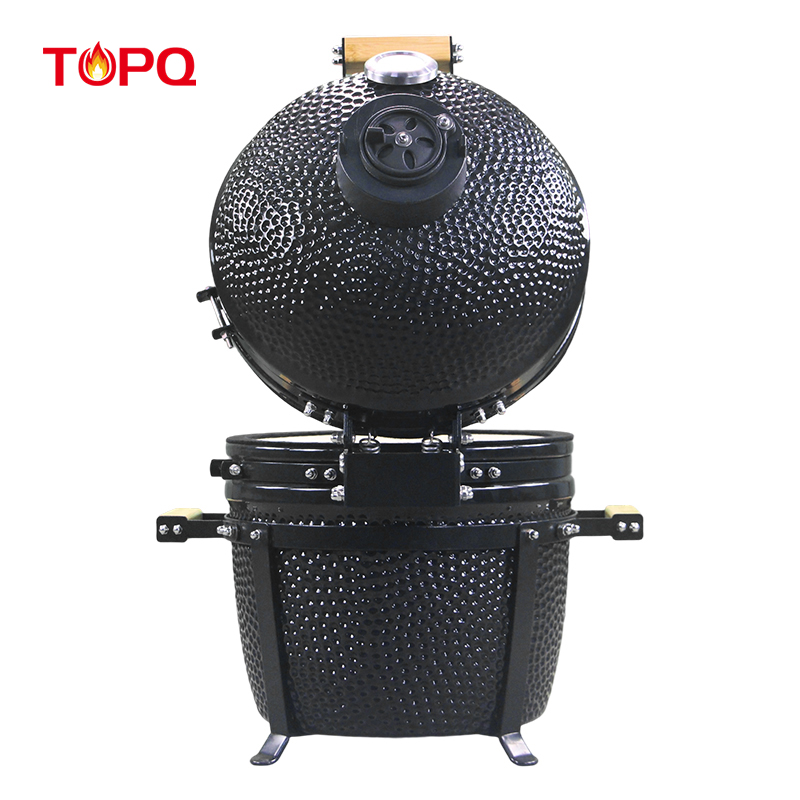
Thick ceramic walls change the entire cooking equation. They rely on thermal mass rather than active heating. The heavy walls absorb heat energy slowly and store it. They uniformly radiate this stored heat back toward the food. You no longer rely on a constant, aggressive fire to replace lost energy. The walls do the heavy lifting for you.
When you place cold, moisture-rich meat inside a hot cooker, physics immediately takes over. The meat contains a massive amount of water. As the ambient heat hits the surface, that water begins to evaporate. Here is how a ceramic grill traps that moisture:
Initial Evaporation: Surface moisture turns into water vapor due to the ambient heat.
Vapor Trapping: Tight fiberglass or felt gaskets seal the dome perfectly. The vapor has very few escape routes.
Saturation Point: The trapped vapor rapidly increases the relative humidity inside the dome.
Wet-Bulb Equilibrium: The air inside reaches maximum saturation for that specific temperature.
Once the air hits this saturation point, the physics of evaporation shift. Dry air drinks moisture greedily. Humid air cannot hold much more water. Therefore, evaporation from the meat slows to an absolute crawl. The heavy dome physically blocks the humidity from escaping into the atmosphere. This creates a self-basting environment. Your expensive cuts of meat stew gently in their own trapped humidity, naturally preserving their internal juices.
Skeptics often raise a valid concern regarding high humidity. They ask, "If it is too moist, will I lose the crispy bark?" Bark is the holy grail of traditional barbecue. Nobody wants mushy, soft meat exteriors. Thankfully, thermodynamics provide a perfect balance inside a ceramic environment.
We must first understand the infamous barbecue "stall." The stall occurs when the meat's internal temperature stops rising, usually around 160°F. Heat energy from the grill gets completely consumed by turning liquid water into vapor. We call this the latent heat of vaporization. The meat literally sweats to cool itself down. In a drafty metal grill, this stall can last for hours because the dry air constantly encourages more evaporation.
A Kamado shortens the stall by increasing surrounding humidity. It provides target parameters for perfect texture. At around 275°F, it hits an ideal equilibrium. The environment remains humid enough to prevent the meat from drying out internally. Yet, it stays hot enough to drive off just enough surface moisture. This triggers the Maillard reaction. Proteins and sugars undergo browning, forming a highly textured, jagged bark without sacrificing internal yield.
Some pitmasters utilize advanced techniques to master this environment. Fat-wrapping, also known as tallow wraps, works beautifully here. You wrap the meat in butcher paper heavily saturated with rendered beef fat. This method limits evaporative cooling even further. Essentially, you fry the exterior of the meat. It creates a perfect, crunchy crust within the high-humidity dome. You get the best of both worlds: intense bark and dripping wet slices.
Many cooks misunderstand their fuel source. They assume lump charcoal is purely dry carbon. This misconception leads them to ignore how fuel impacts humidity. High-quality hardwood lump charcoal contains more than just carbon. It retains organic material from its original wood state.
Charcoal undergoes pyrolysis, but it rarely burns away every single organic molecule. Good hardwood lump charcoal contains residual hydrogen and oxygen atoms. It is not entirely void of moisture. When you evaluate fuel, remember these key traits:
It is porous and acts like a sponge for environmental moisture.
It retains chemical bonds that release water during the combustion process.
It burns much cleaner than manufactured briquettes, producing pure water vapor instead of ash-laden smoke.
We must also look at real-world implementation details. Lump charcoal naturally absorbs ambient humidity during storage. If you leave a bag in your garage, it pulls moisture from the air. Charcoal can actually absorb up to 5% of its total weight in water. You might think you are lighting a dry fire, but you are actually introducing hidden water into your cooker.
During combustion, the fire breaks chemical bonds. This chemical and physical reaction releases the stored moisture. Trace water vapor flows upward from the firebox. Because your cooker is tightly sealed, this vapor stays trapped inside the dome. It adds to the overall humidity levels from the very start of the cook. Long before the meat begins to sweat, your burning fuel has already started humidifying the chamber.
Water pans generate heavy debate within professional barbecue circles. Go to any online forum, and you will see heated arguments. Traditional offset smokers absolutely require water pans. They need the artificial humidity to fight the constant draft. However, ceramic grills operate under completely different physical laws.
For pure moisture retention, a water pan is redundant here. The grill already traps enough vapor naturally. Adding gallons of water can actually cause serious problems. Excessive artificial humidity pushes the environment past equilibrium. The vapor travels upward and hits the colder cast-iron top vent. It condenses, mixes with soot, and creates black condensation. We call this "creosote rain." It drips directly onto your food, ruining the flavor instantly.
We must redefine the water pan's actual utility. You should not use it for humidity. Instead, you use it for thermal mass and cleanliness. Here is exactly when a pan proves useful:
As a Heat Sink: Water absorbs massive amounts of heat. It smooths out temperature spikes. It prevents flare-ups during very long "low and slow" brisket cooks.
As a Grease Catcher: Rendering fat drips downward. If it hits the hot ceramic deflector plates, it burns. This produces bitter, acrid white smoke. A pan catches this grease safely.
Table: Water Pan Utility Decision Matrix | ||
Cooking Scenario | Add Liquid? | Primary Purpose |
|---|---|---|
Short smokes (Ribs, Chicken) | No (Use a dry pan) | Catch grease to prevent bad smoke |
Long overnight smokes (Brisket, Pork Shoulder) | Optional (Small amount) | Act as a heat sink to stabilize temps |
High-heat roasting (Turkey) | No | Prevent fat fires |
We highly recommend using an elevated "dry pan" method. Place a foil pan above your ceramic deflector plates. Use foil balls or metal spacers to keep the pan lifted about an inch off the hot ceramic. This air gap prevents the deflector plate from transferring direct heat into the pan. You catch the falling grease safely without boiling water. You avoid overly saturating the cook chamber while protecting your food from nasty grease smoke.
The superior moisture retention of a ceramic grill is not a subjective claim. It is a highly verifiable outcome based on solid physics. Low airflow dynamics prevent evaporative cooling. Thick ceramic insulation builds a stable, highly saturated microclimate. Trapped vapor dynamics ensure your meat bastes itself in its own natural juices. You no longer have to fight the cooker to produce competition-quality food.
You should view the higher upfront price tag as a direct investment in yield and quality. You save money by eliminating ruined, dry briskets. You also reduce the exhausting, active babysitting required by traditional metal smokers. You gain peace of mind knowing the grill works alongside you, protecting the meat automatically.
Your next steps involve evaluating specific sizes and features. Consider your primary cooking style. Decide if you prefer long overnight smoking or high-heat searing. Choose a model that perfectly fits your backyard space and feeding requirements. Trust the science, master your airflow, and enjoy the juiciest barbecue you have ever produced.
A: Yes, frequent "peeking" disrupts the environment. Opening the dome releases all the trapped water vapor and introduces a rush of cold oxygen. This feeds the fire, causing sudden temperature spikes and rapid moisture loss. Remember the golden rule of barbecue: "If you're looking, you ain't cooking." Keep the lid closed to maintain the humid microclimate.
A: Yes, it is entirely possible. If you completely choke the exhaust vents, trapped steam cannot cycle out. This creates a highly pressurized, overly wet environment. Your bark will turn soft, mushy, and unappetizing. Precision airflow management is critical. You must leave the top vent open just enough to let stale smoke escape.
A: This happens due to condensation mechanics. When excessive internal water vapor hits a cold cast-iron top vent, it rapidly condenses. It mixes with soot and smoke particles, forming a black, bitter liquid called creosote rain. You can prevent this by running the grill slightly hotter or ensuring the top vent is fully warmed before adding meat.


